Goodbye Lhasa
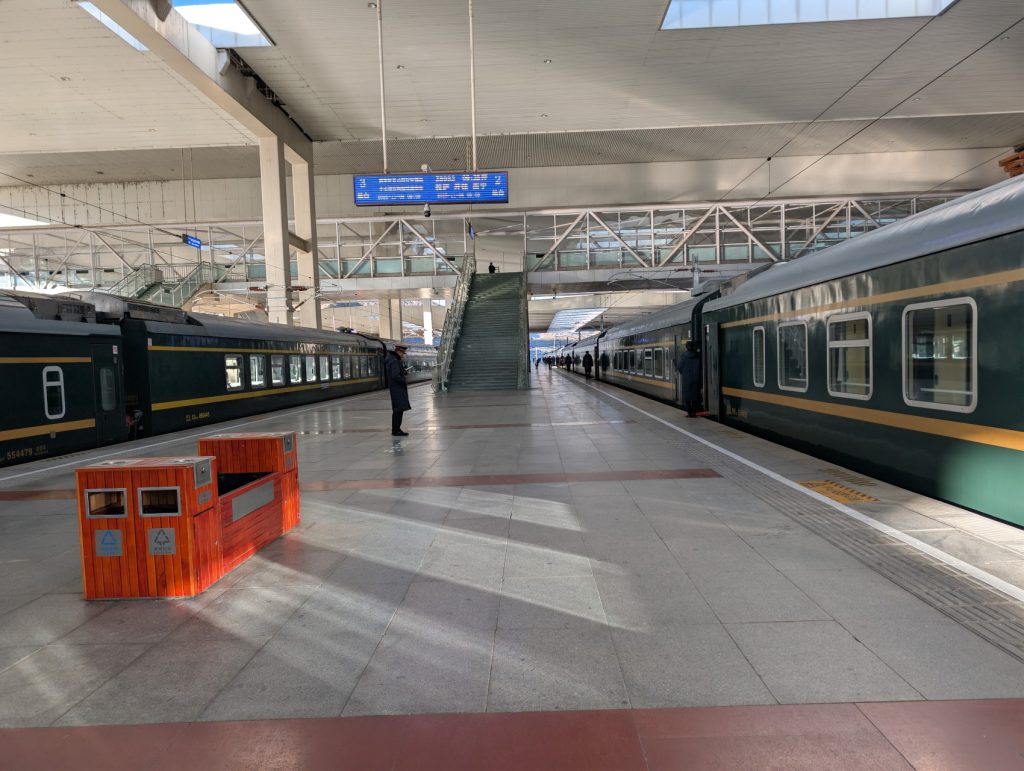
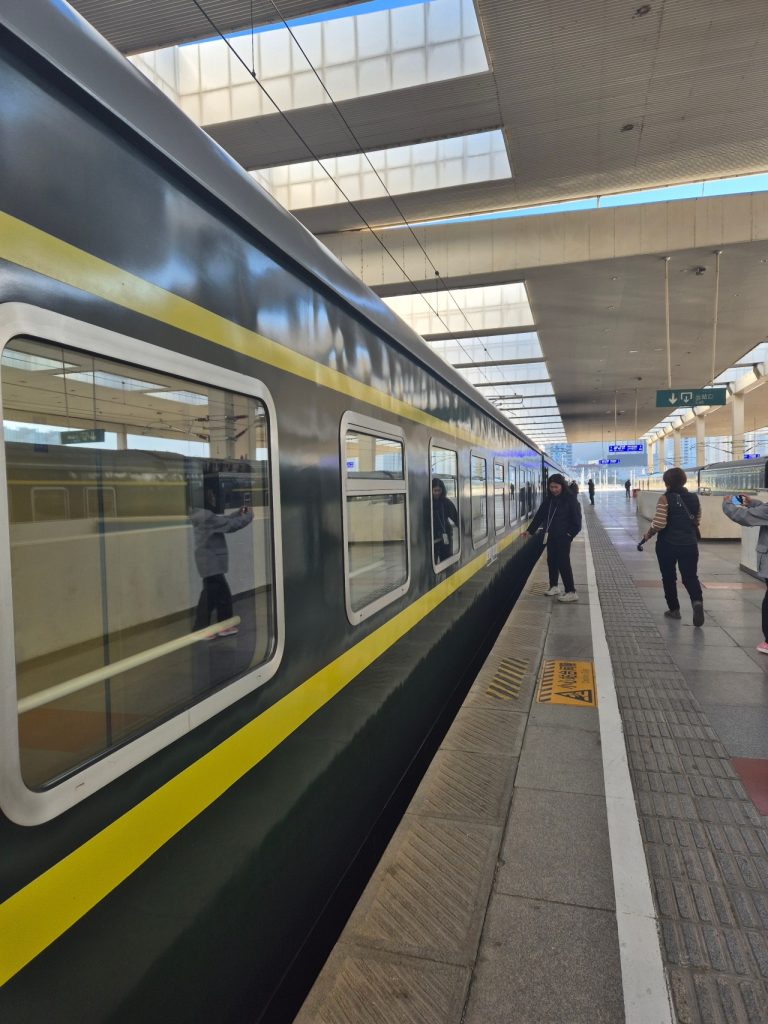
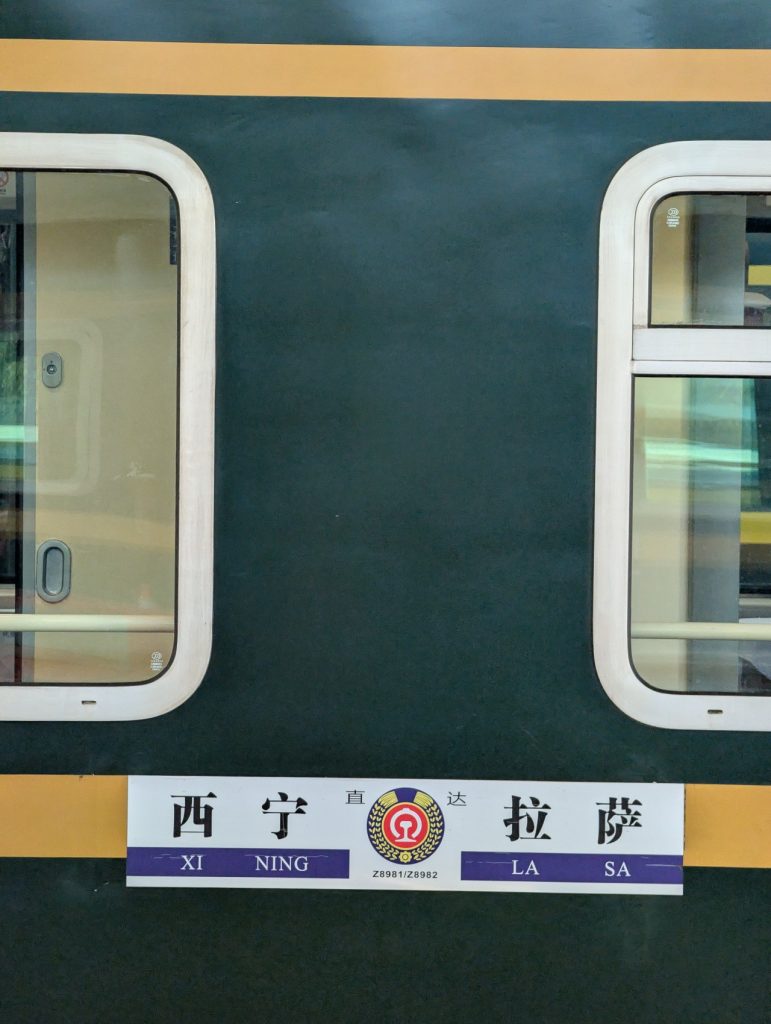
After breakfast, we headed to Lhasa Railway Station to board the legendary Qinghai-Tibet Railway, beginning our 22-hour journey from Lhasa to Xining.
Our tour guide shared that most travellers take this train from Xining into Lhasa, hence that route is usually much busier. Since we were travelling out from Lhasa, there were noticeably fewer passengers and, best of all, no worries about altitude sickness. A pretty great start already.
This post is part of our 13-day Tibet journey, documenting each day of our journey across Nyingchi, Lhasa, Everest Base Camp, and the Qinghai-Tibet Railway. Read the full itinerary here.
The Qinghai-Tibet Railway: The “Sky Railway”
Often called the “Sky Railway,” the Qinghai-Tibet Railway is the highest railway in the world and one of China’s greatest engineering feats.
Stretching over 1,900 kilometres, with more than half of the route running above 4,000 metres, the railway connects Lhasa and Xining, cutting straight through the vast Tibetan Plateau. Built to withstand extreme cold, permafrost, and thin air, it opened up regions that were once almost impossible to access.
I have always heard so much about the Qinghai-Tibet Railway and being able to finally take it this time feel the experience special – and slightly surreal.
Boarding the Qinghai-Tibet Railway at Lhasa Railway Station
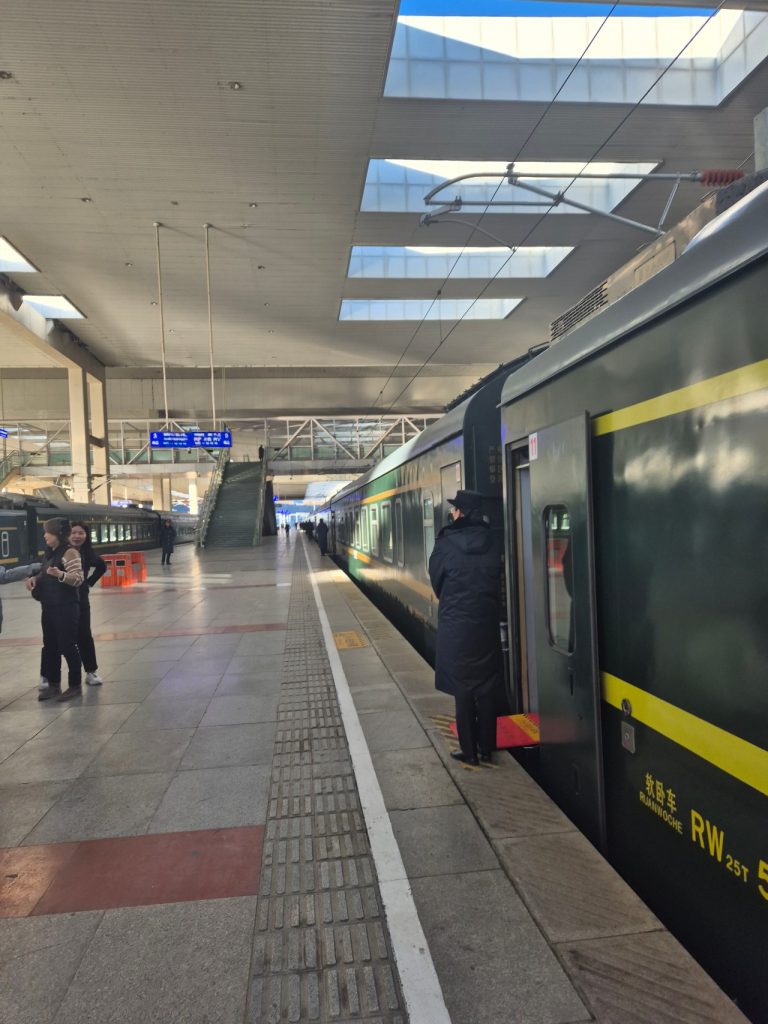
Soft Sleeper Cabin: Surprisingly Comfortable
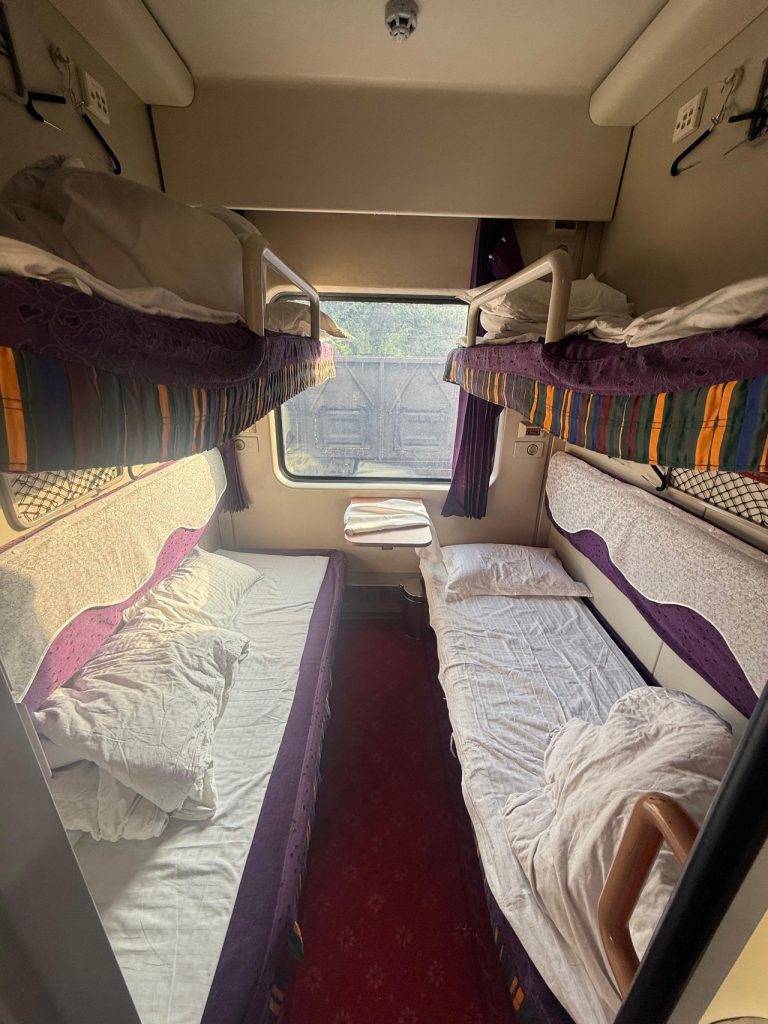
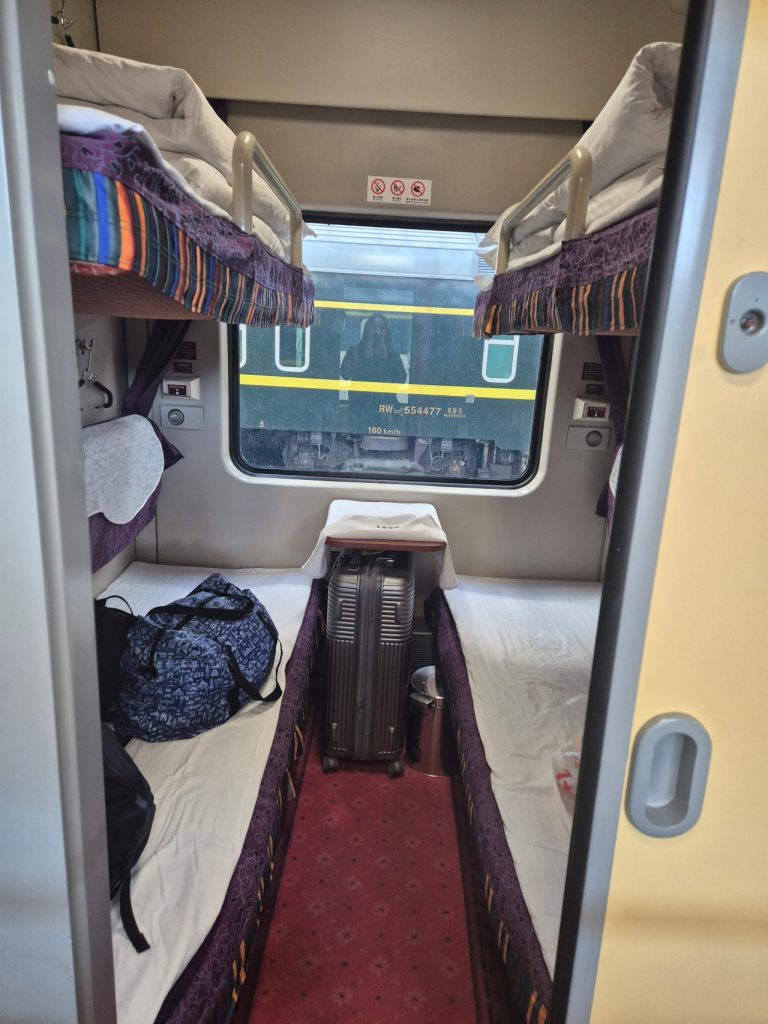
As part of the tour package, we got the soft sleeper cabins, which made a world of difference for such a long journey.
Each cabin has:
- Four bunks over two levels
- More spacious berths with decent headroom
- A pillow and blanket for each bunk
- An individual reading light
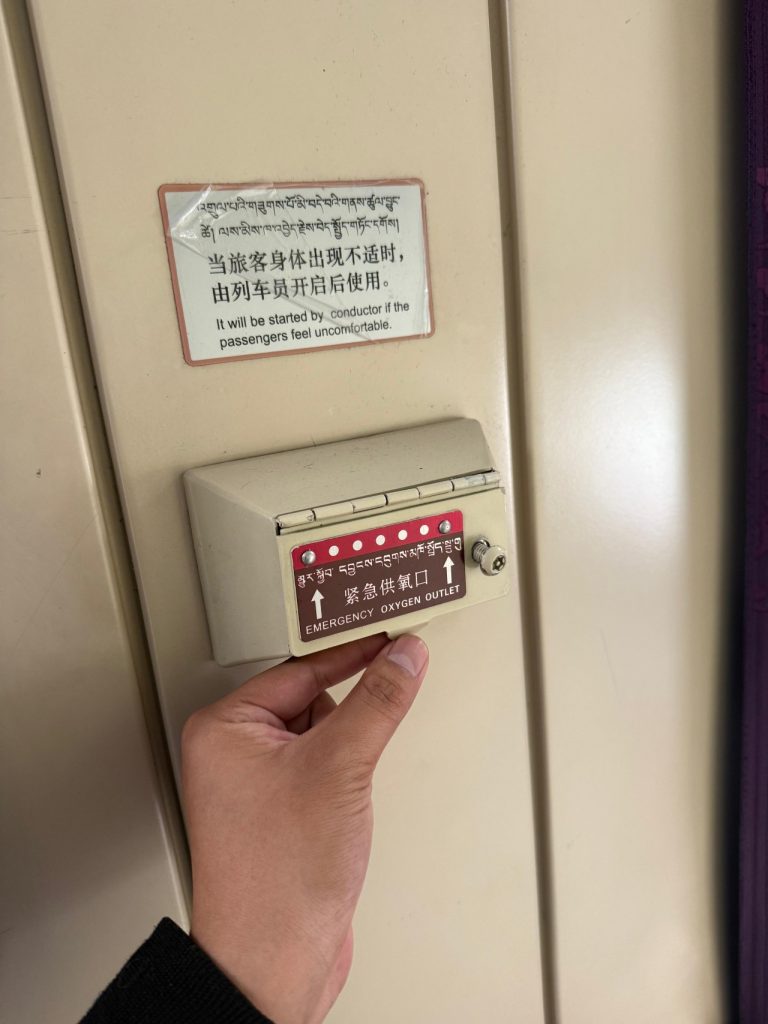
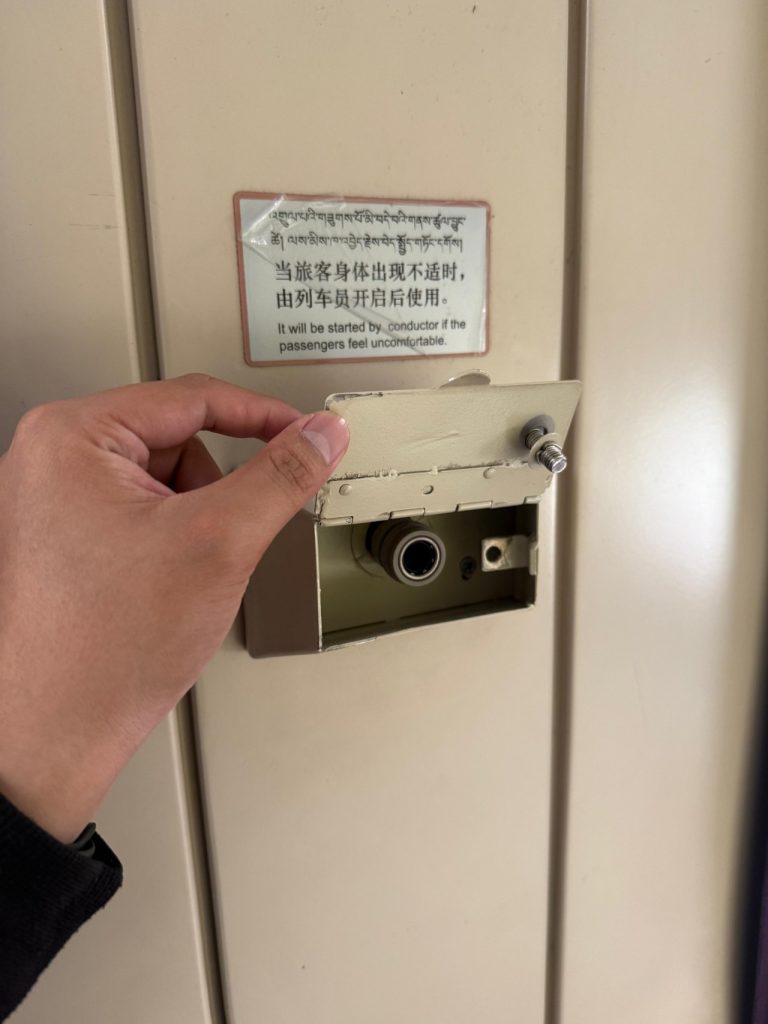
- A personal oxygen outlet
- A door that can be closed and locked
Compared to the hard sleeper cabins (six bunks, three levels, no door – and beds that honestly look like wooden planks), this felt pretty luxurious. For a 22-hour ride, I’d say it was more than comfortable enough.
What to Pack for the Train (Travel Tips)
Cabin space is limited, so we have to store all our big luggage outside. So definitely pack a small day bag with:
- Toiletries
- Charging cables & power bank
- Slippers
- A change of clothes
- Snacks & cup noodles
Each carriage has hot water dispensers, so bring a reusable water flask. Just don’t expect boiling water at this altitude, it’s not quite hot enough.
Pro tip from the train staff:
Cook your noodles first, pour away the water, then add seasoning and fresh hot water. Much better.
Our tour company also gave us a fruit bento set, so between that, snacks, and instant noodles, we were very well-fed.
Onboard Facilities & Dining Options
Beyond the cabins, the train is well equipped:
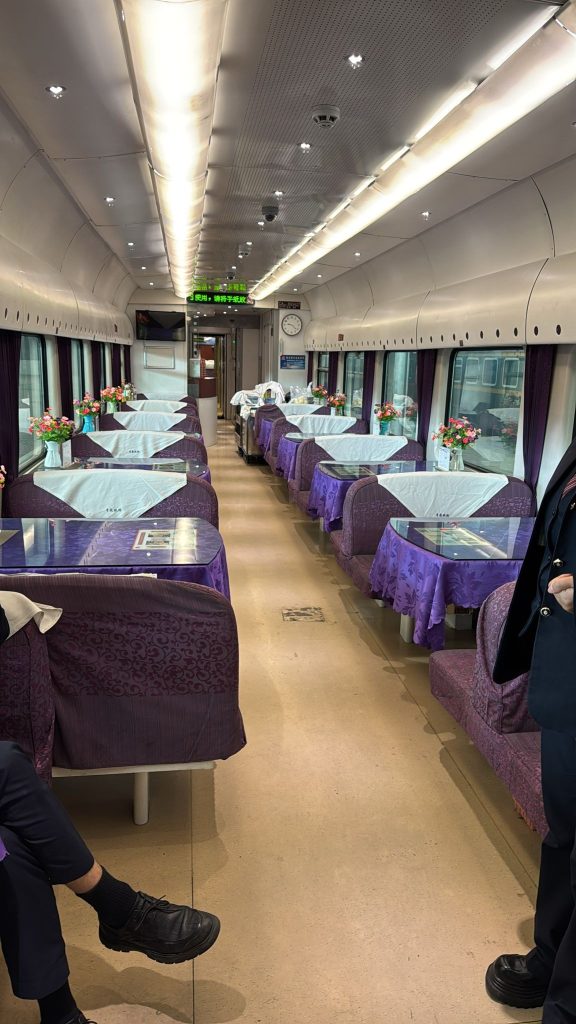
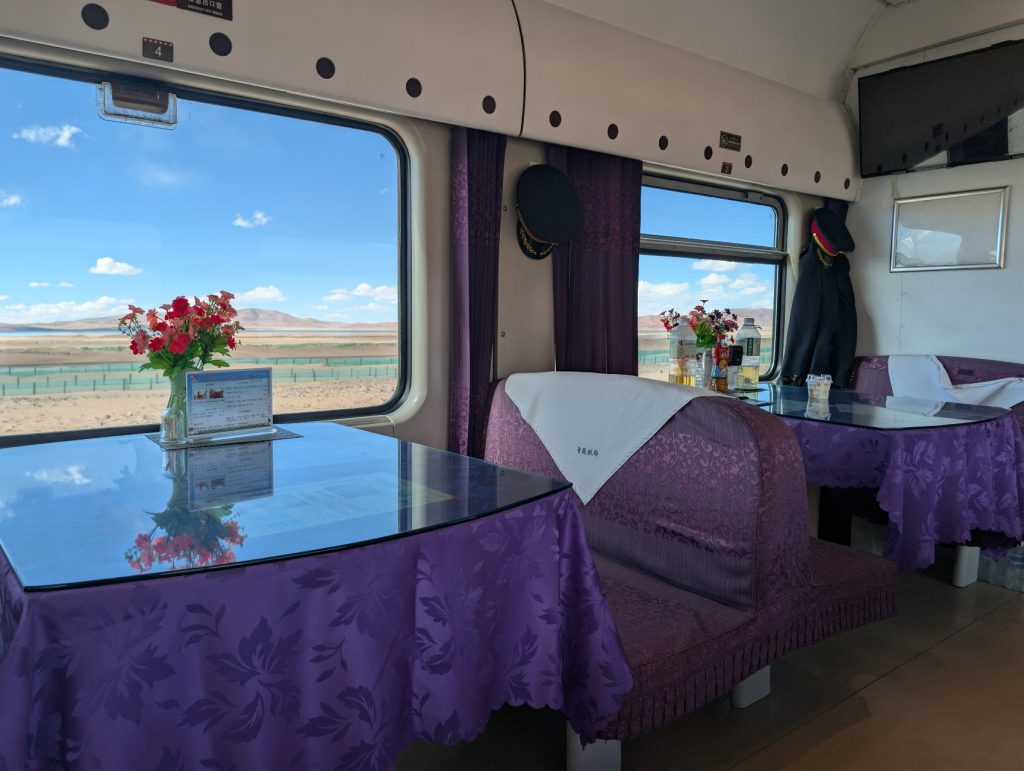
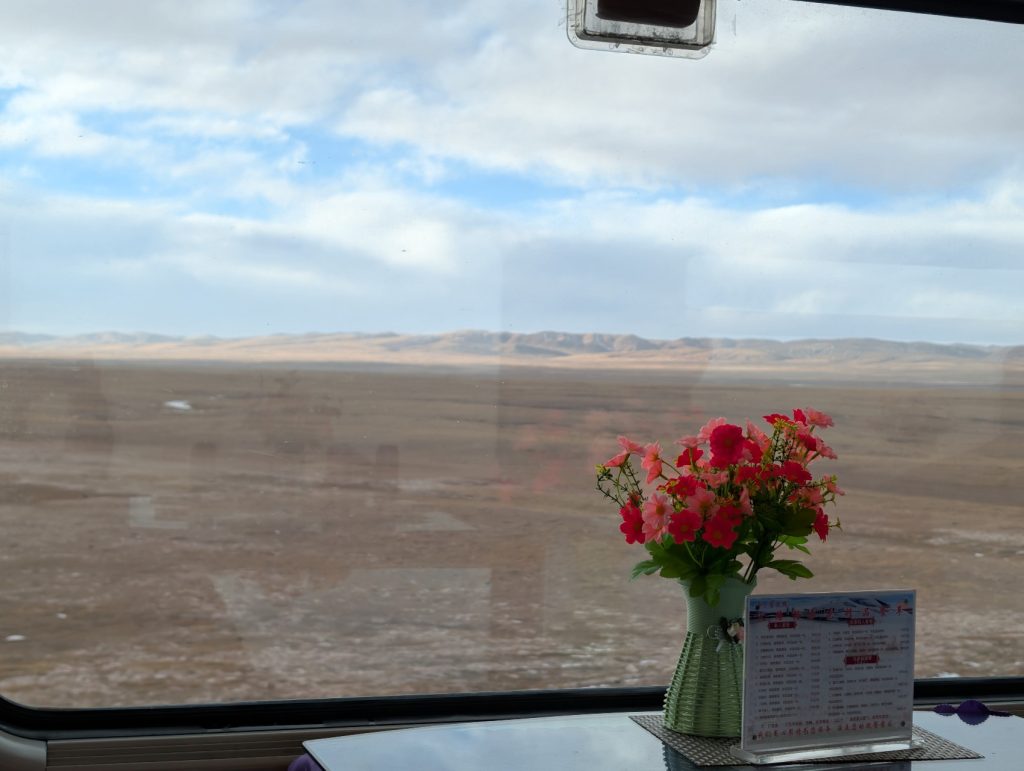
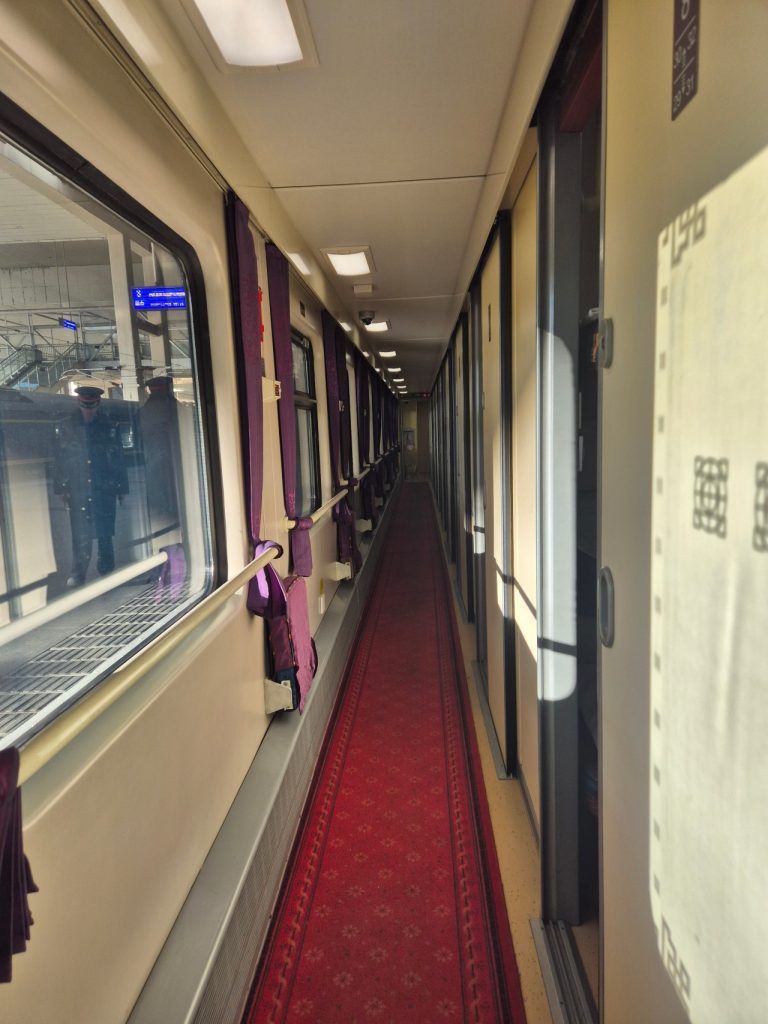
- Large windows and fold-down seats along the corridors. We spent a lot of time sitting by the corridor windows, watching the Tibetan Plateau slowly unfold outside.
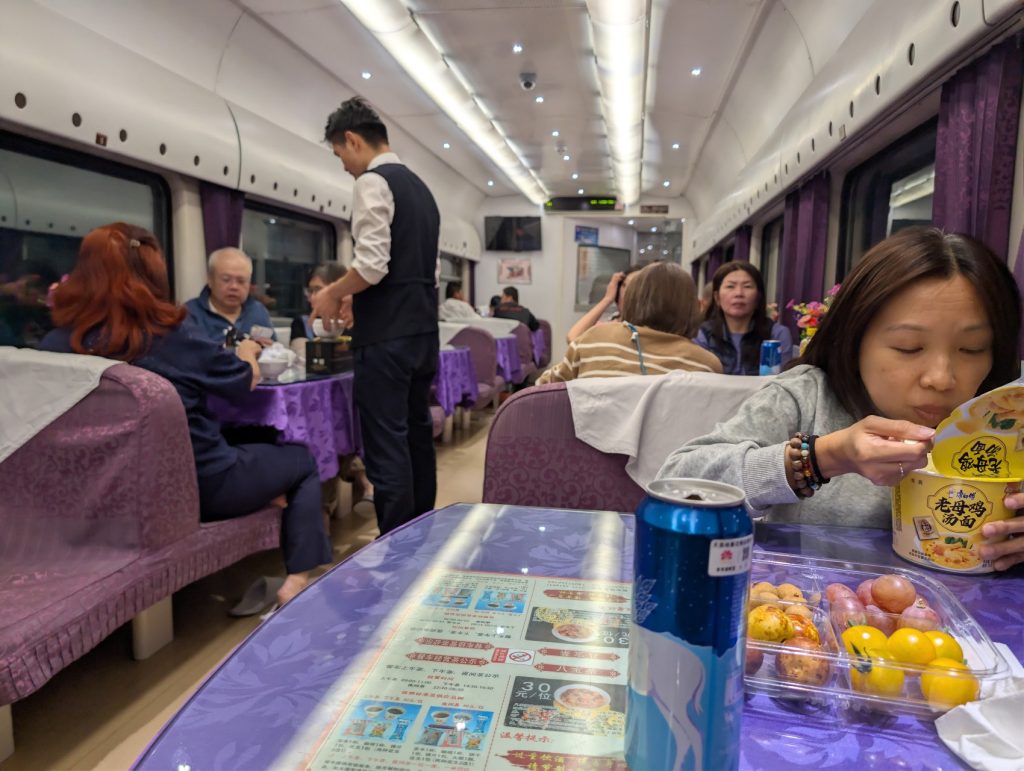
- Dining car serving hot meals
- Food carts rolling through the aisles selling noodles, rice, drinks, snacks, and cup noodles
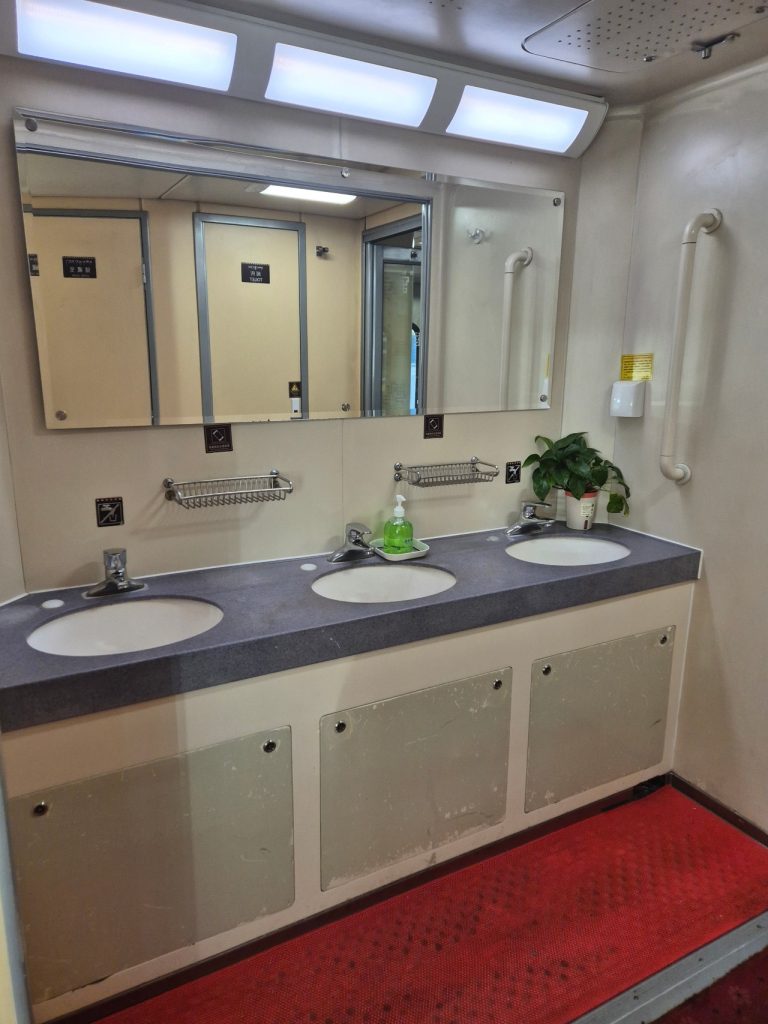
Toilets are located at both ends of each carriage:
- One seated toilet
- One squat toilet
- Wash areas with three sinks, hot & cold water, and soap dispensers
One thing to mention: the toilets cannot be used when the train are in station and only resume when the train starts moving.
VIP Service on the train
Maybe because we were the only tourists onboard and our tour group have the entire train carriage to ourselves, we somehow received “VIP treatment.” The Qinghai–Tibet Railway staff gave us a detailed introduction to the railway’s history, explained the pressurised cabins, showed us how to use the oxygen outlets, and pointed out landmarks along the way.
They really made the experience memorable. Though it later became clear why, as they spent the day selling souvenirs like books, moisturizers, baijiu, Tibetan snacks… now it all makes sense
Watching the Tibetan Plateau Glide By
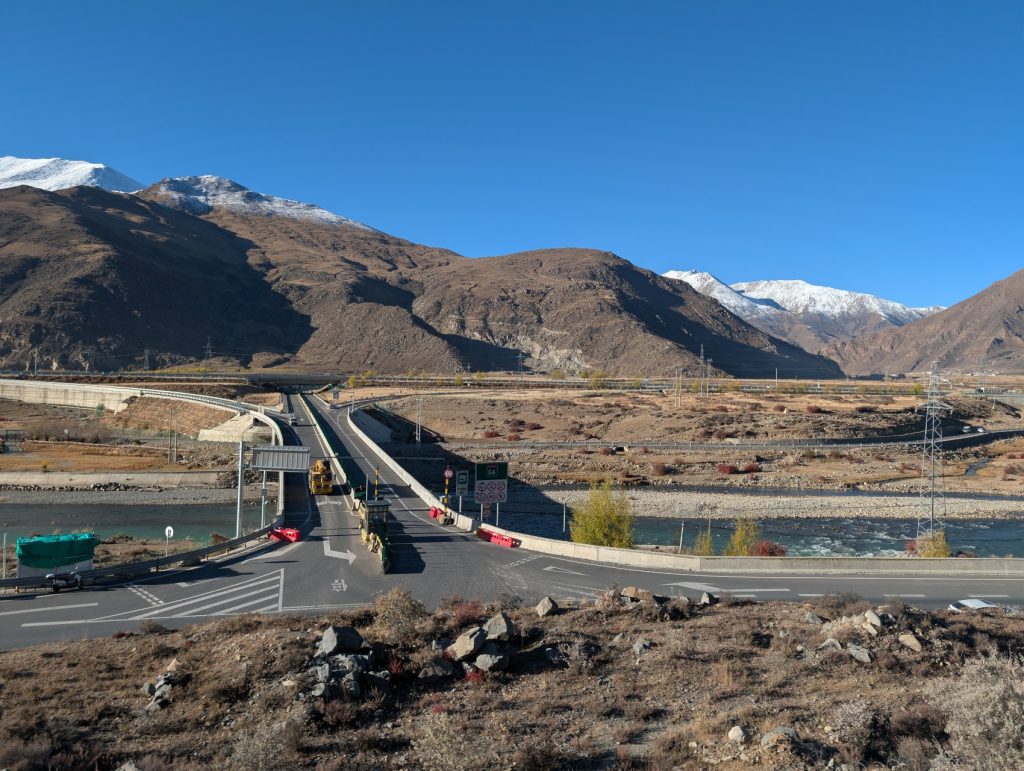
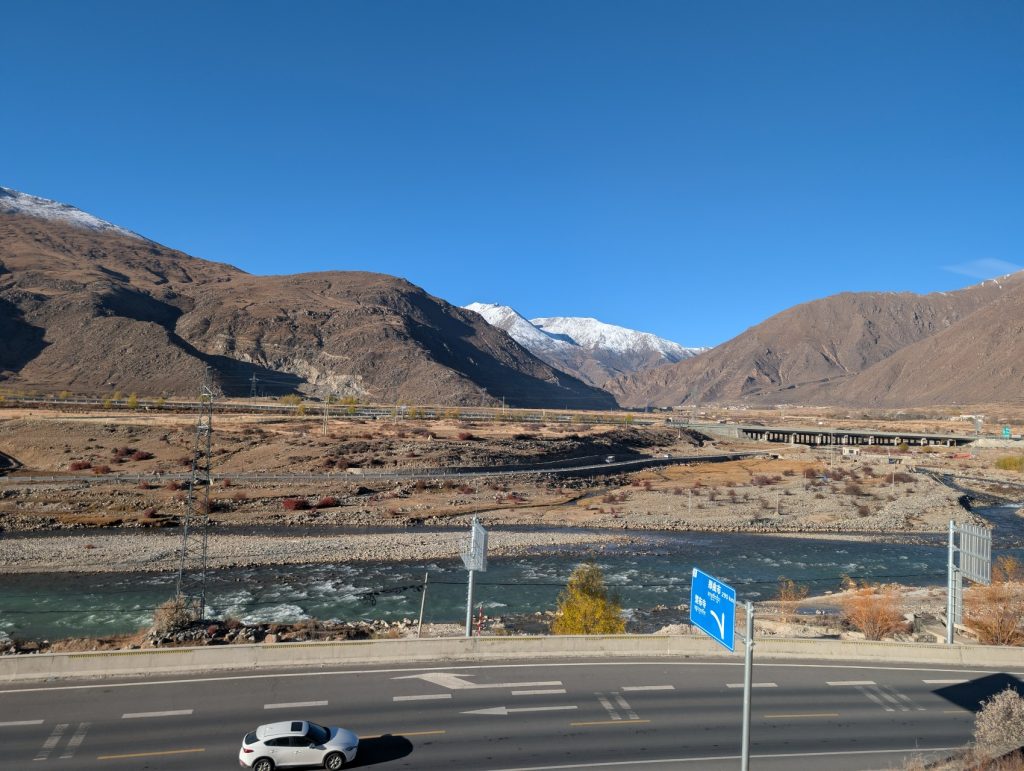
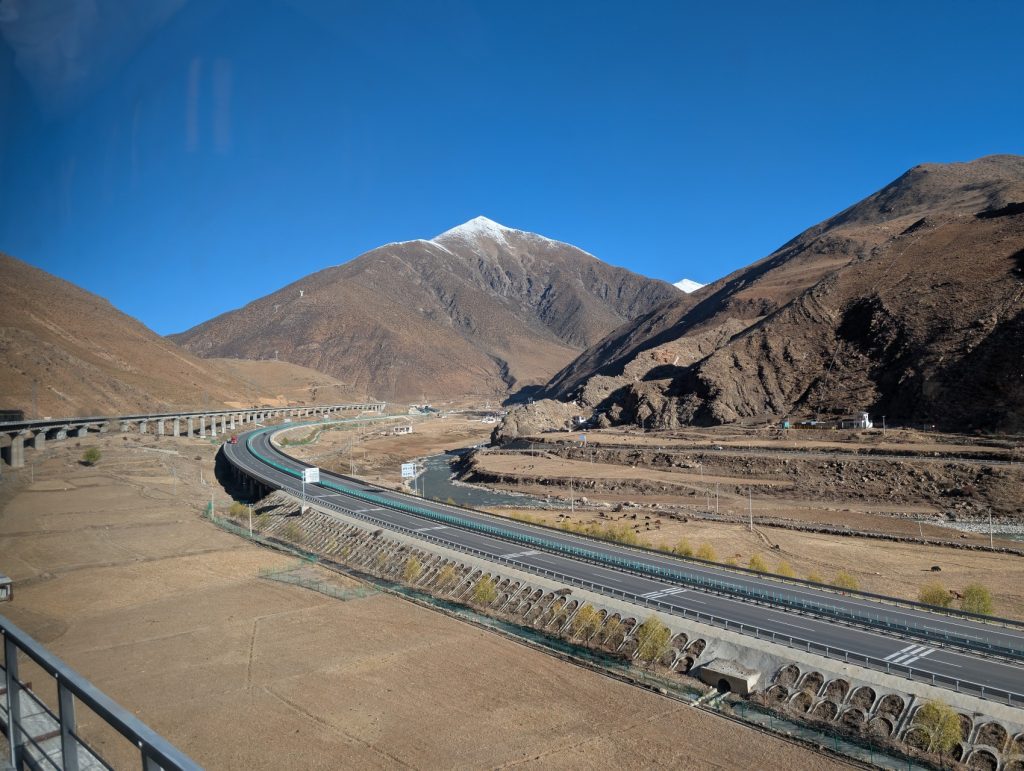
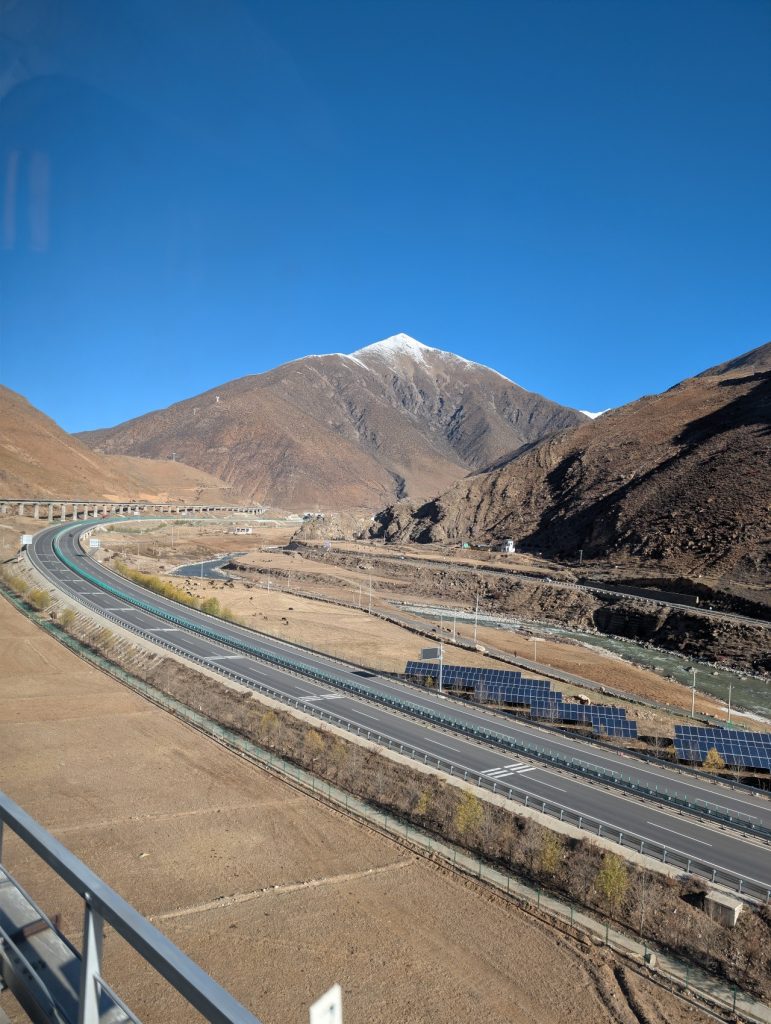
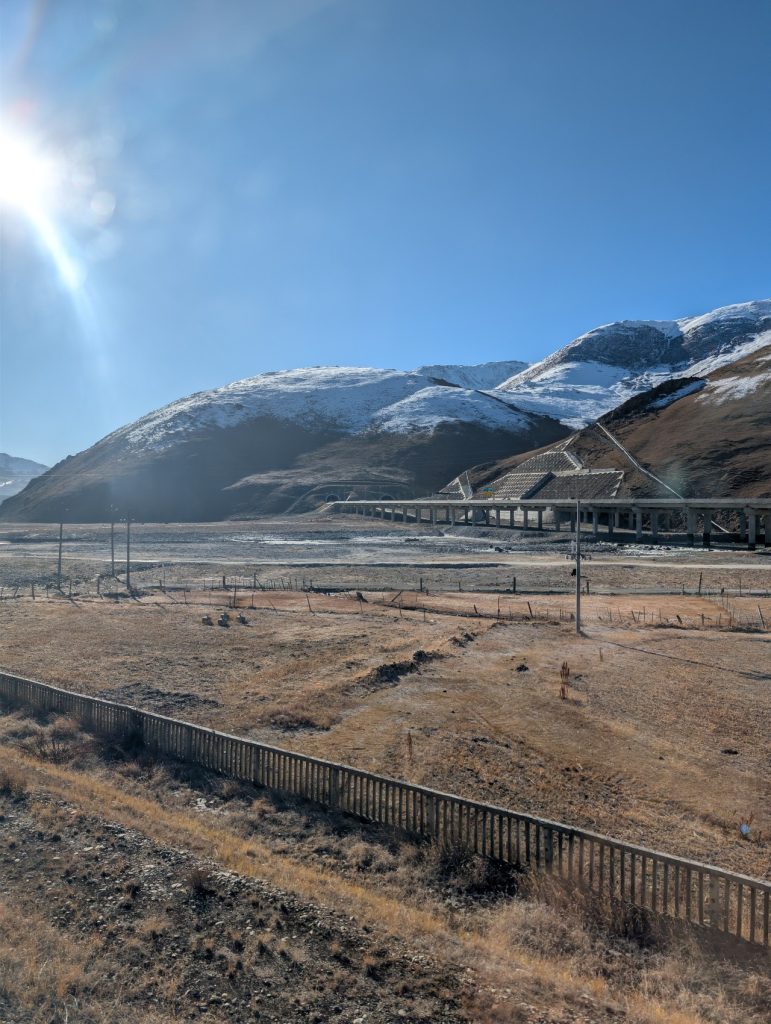
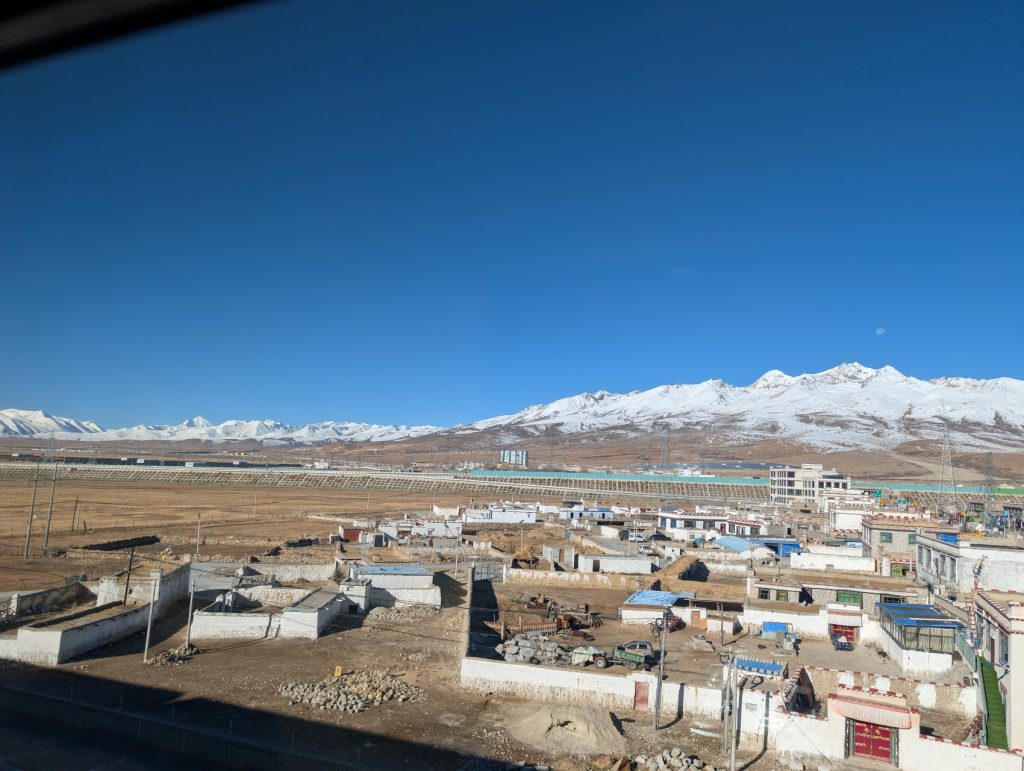
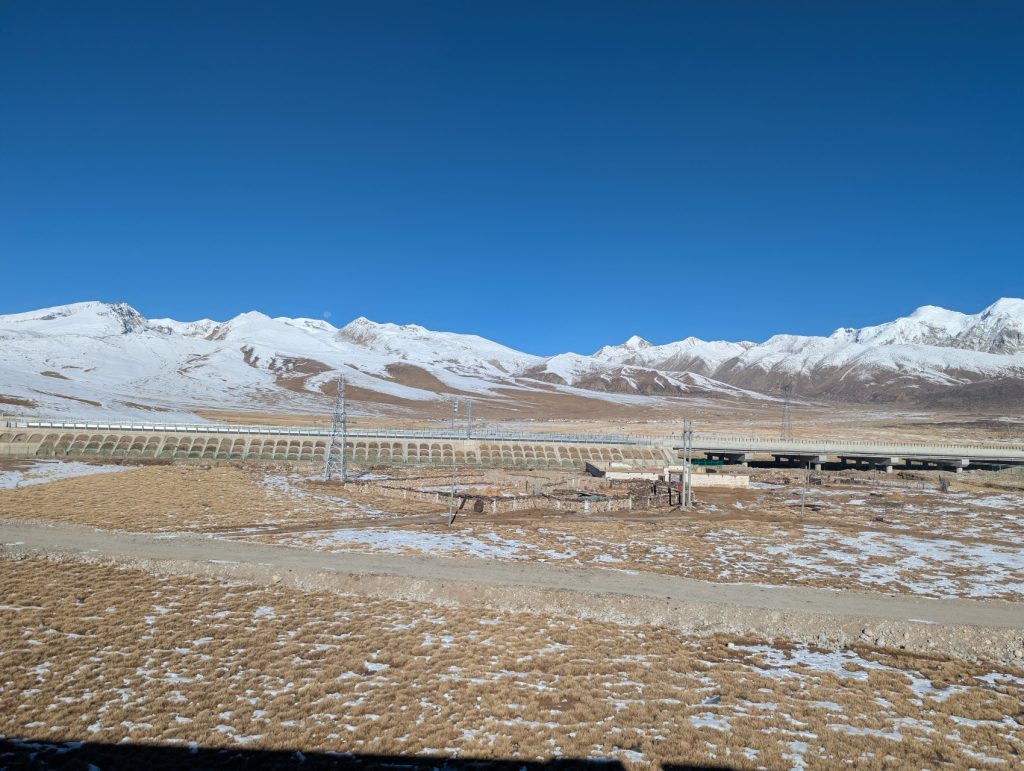
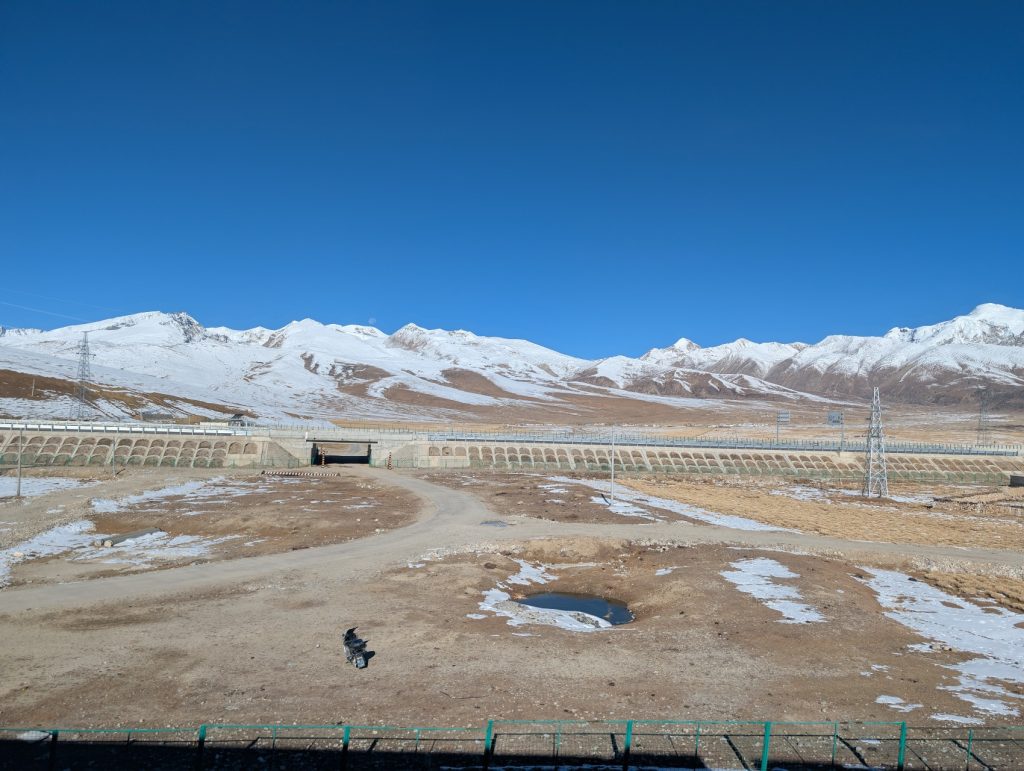
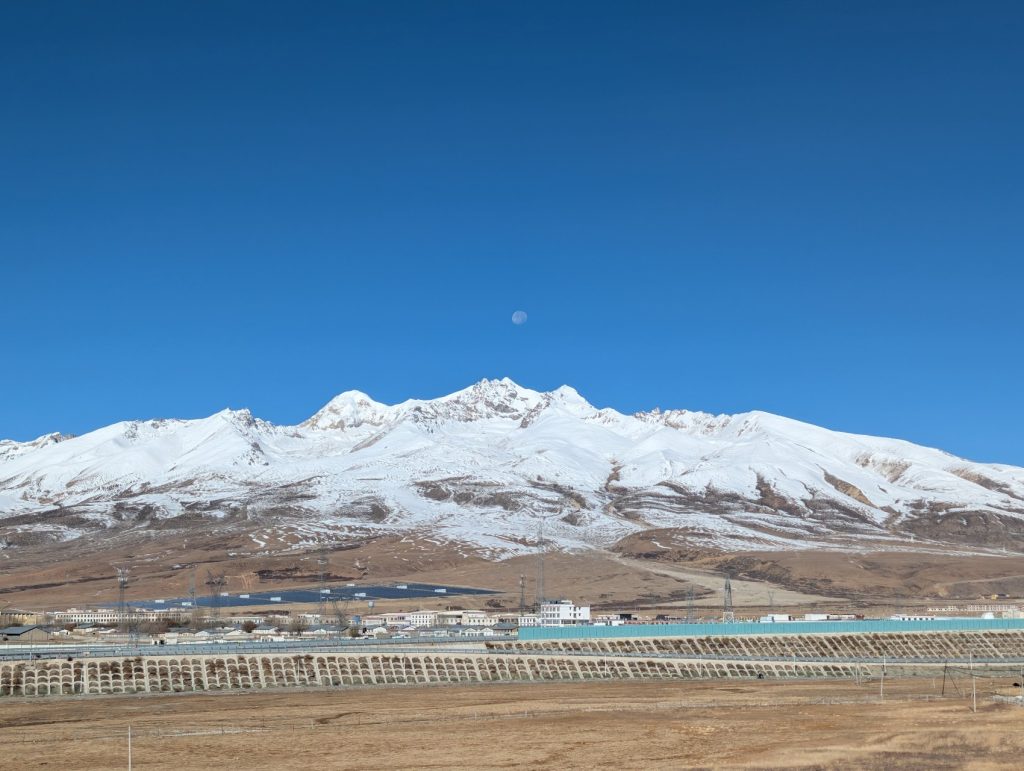
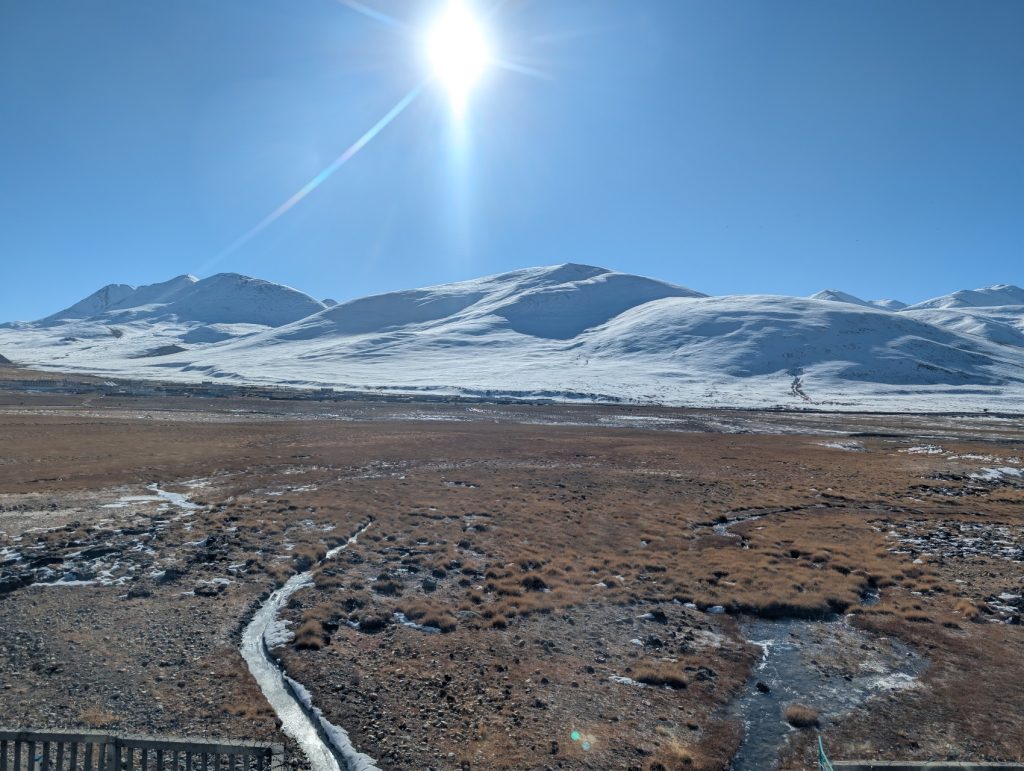
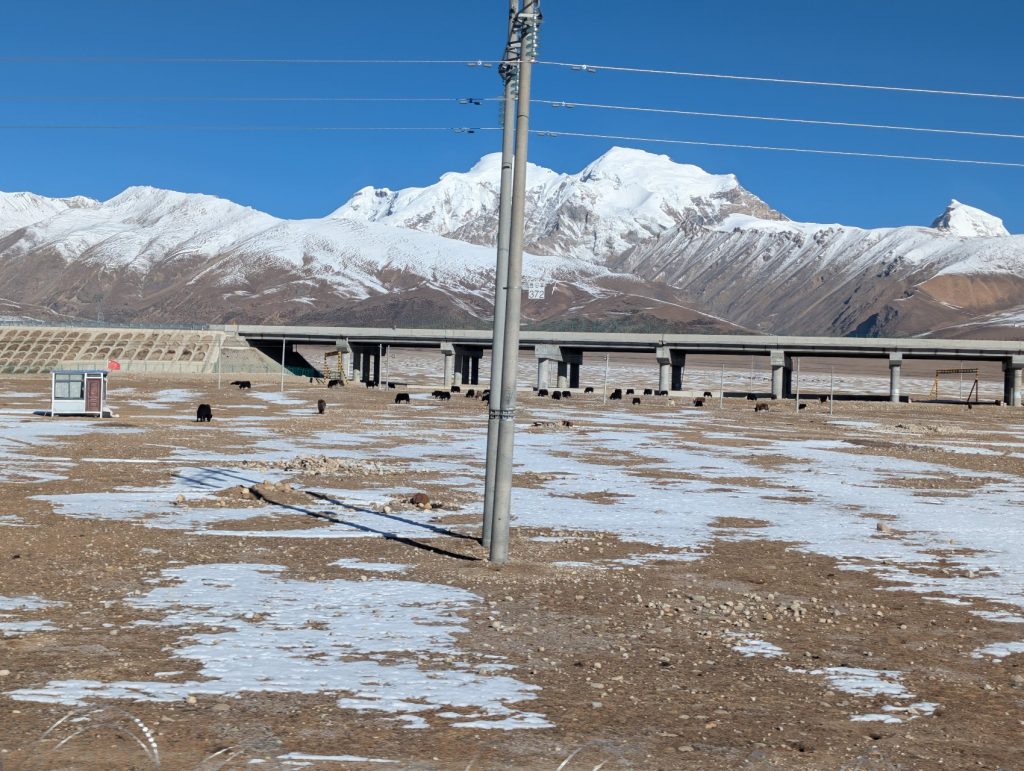
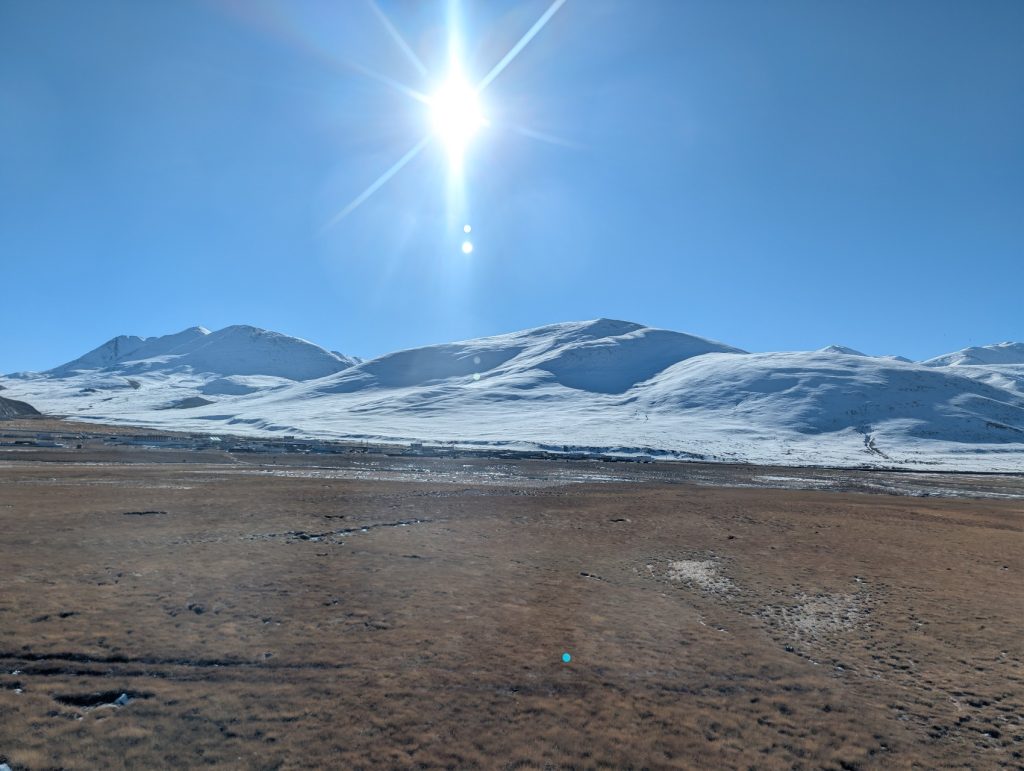
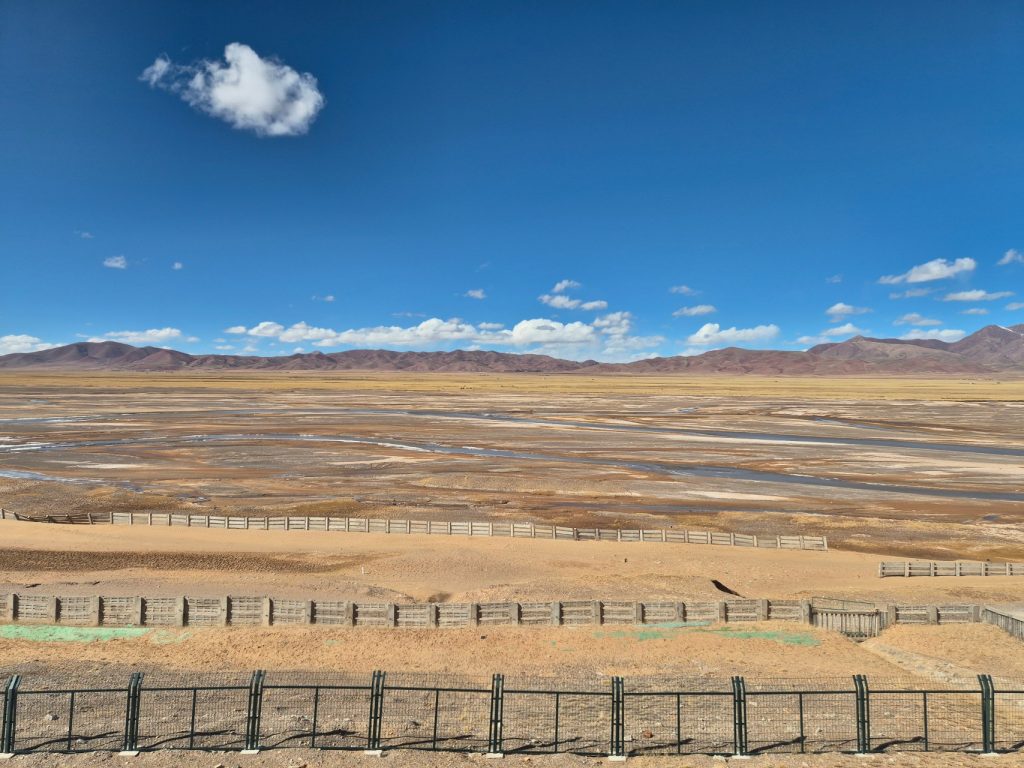
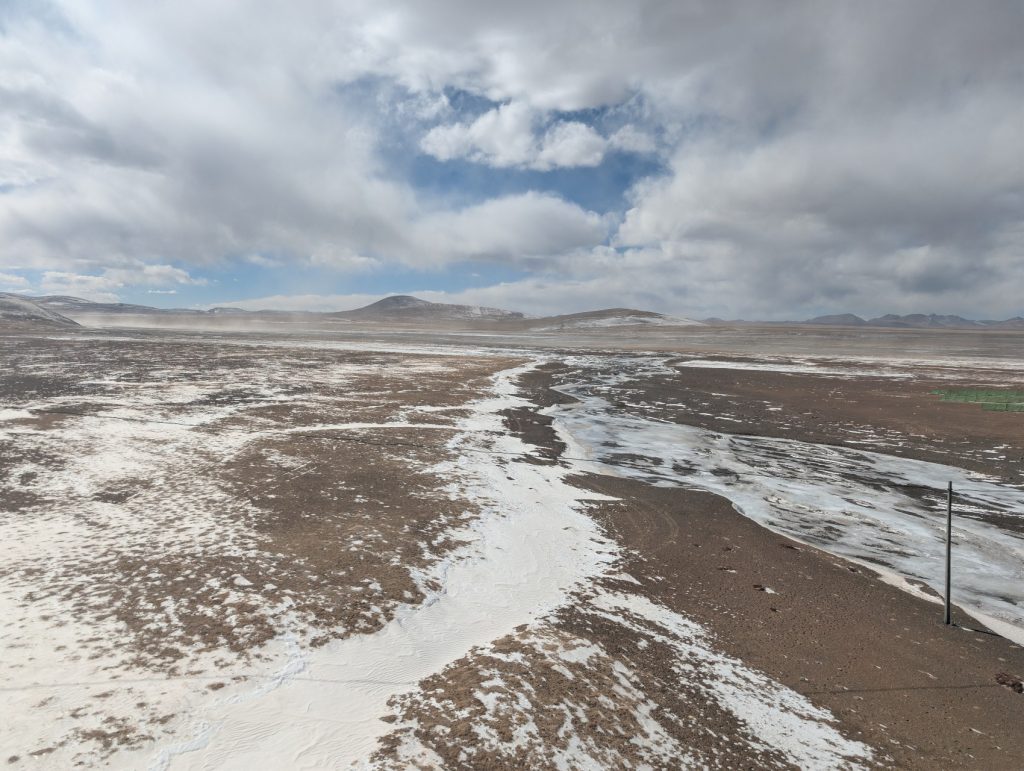
Our journey took us through Lhasa, Dangxiong, Naqu, Anduo, Tuotuo River, Golmud (Ge’ermu), and finally Xining, cutting across vast, remote landscapes at breathtaking altitudes. As the train glided smoothly across the plateau, endless panoramic views unfolded outside the windows.
Iconic Sights Along the Route
The scenery outside was nothing short of spectacular. Highlights included: Qinghai Lake, the Kunlun Mountains, Kekexili, the Changjiang (Yangtze) River Source area at Gebihongliu, Mount Tanggula, Cuona Lake, and the sweeping Changtang Grassland.
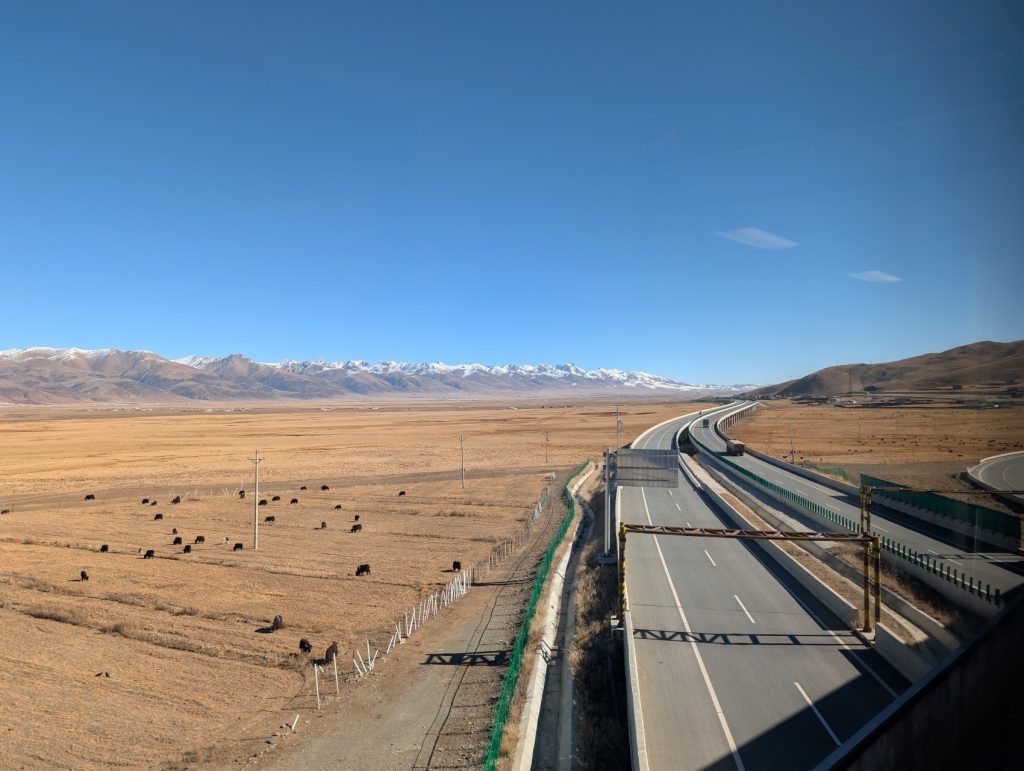
The scenery shifted constantly from snow-capped peaks and frozen lakes to wide-open grasslands that seemed to stretch endlessly into the horizon.
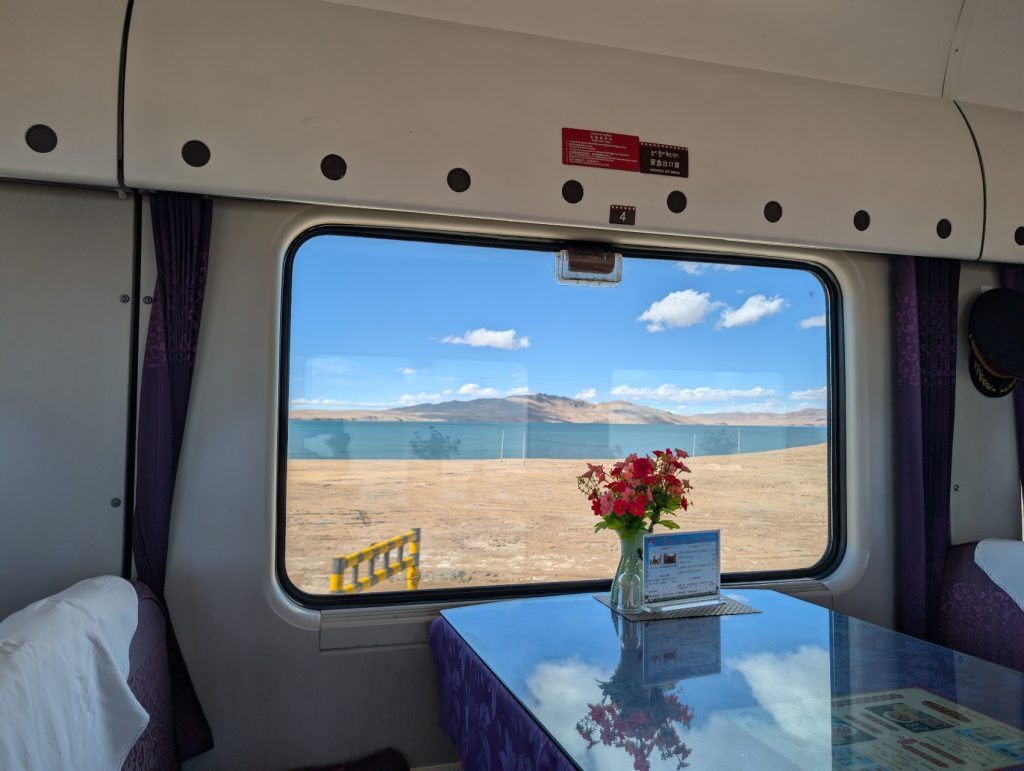
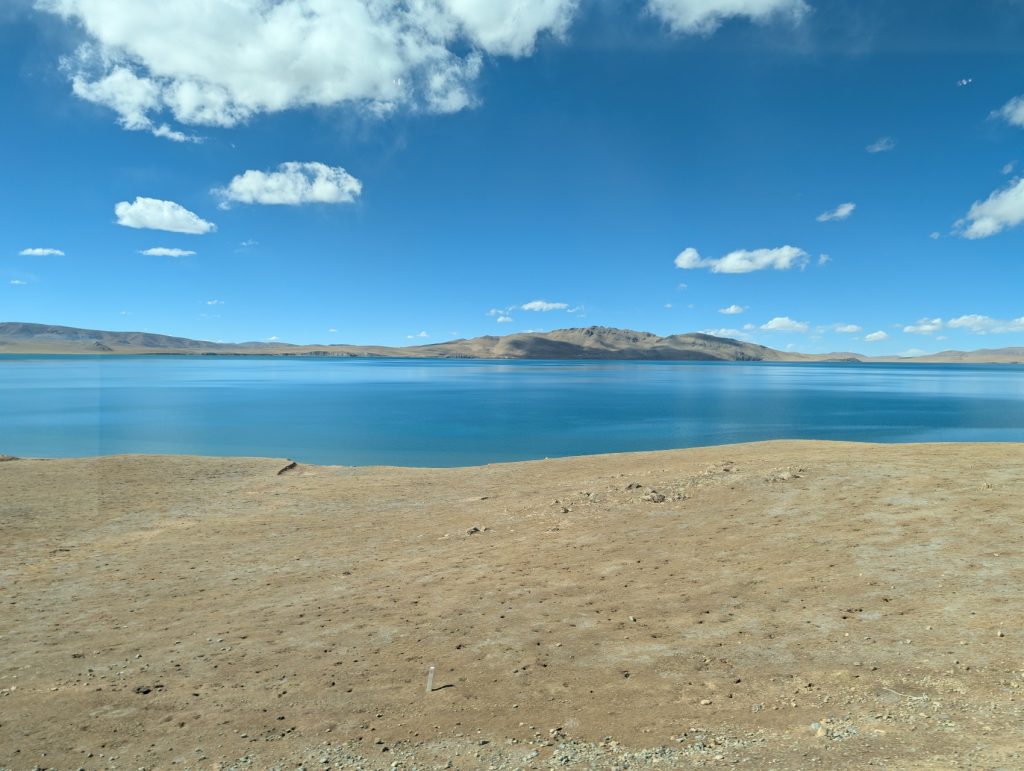
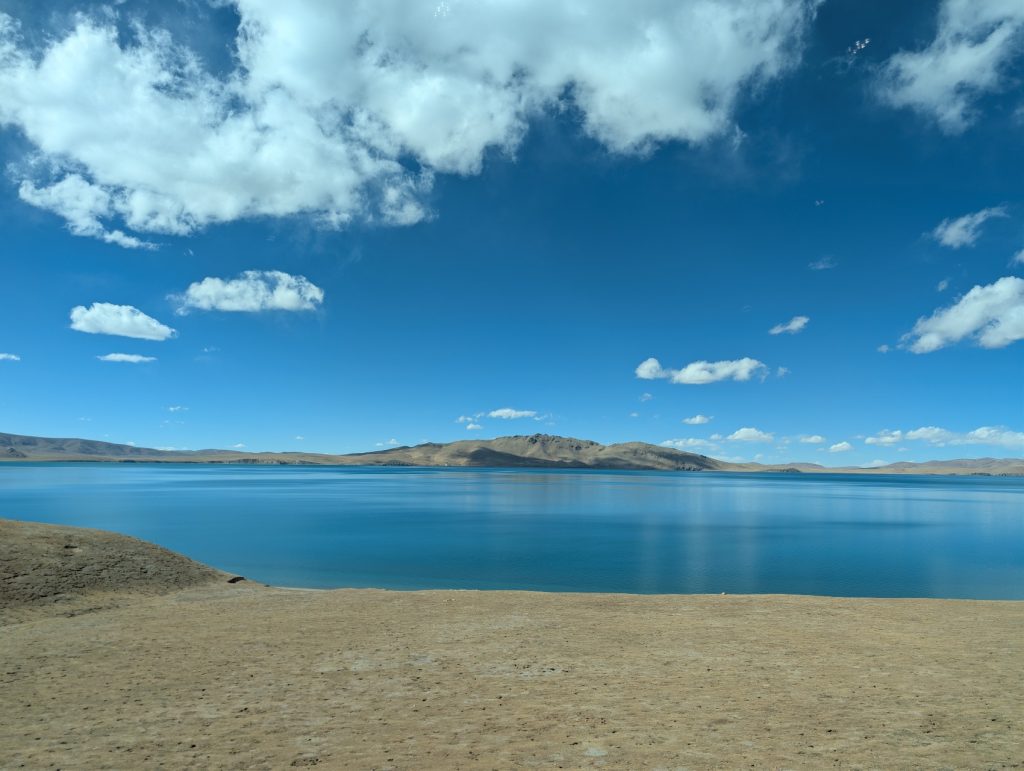
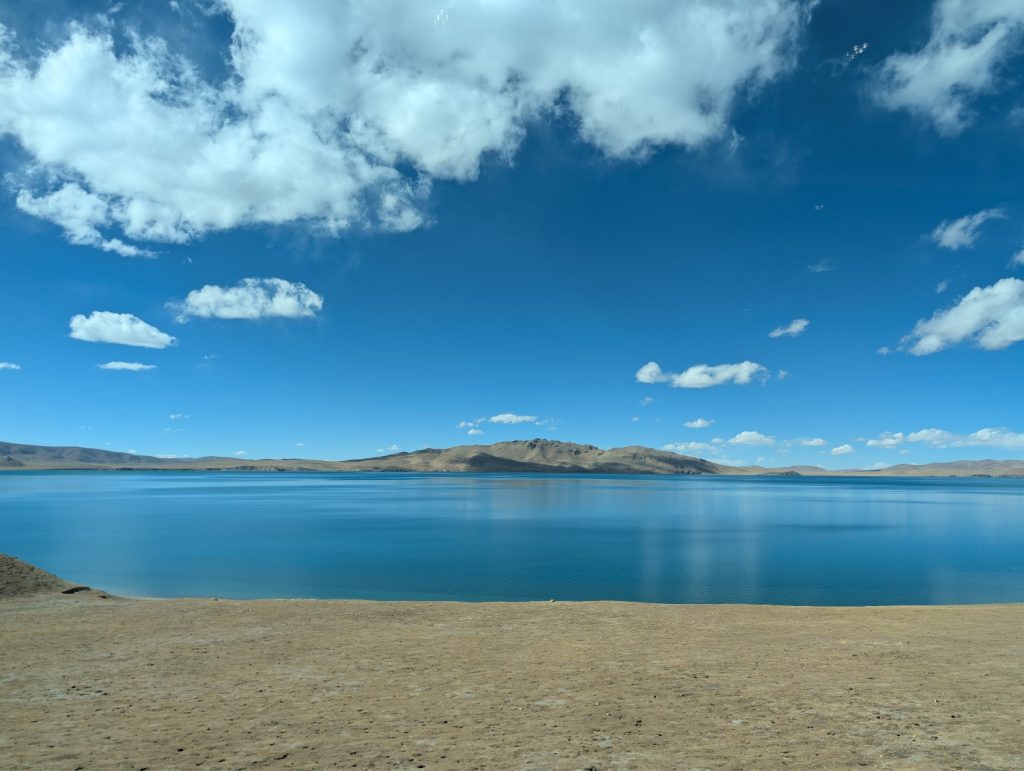
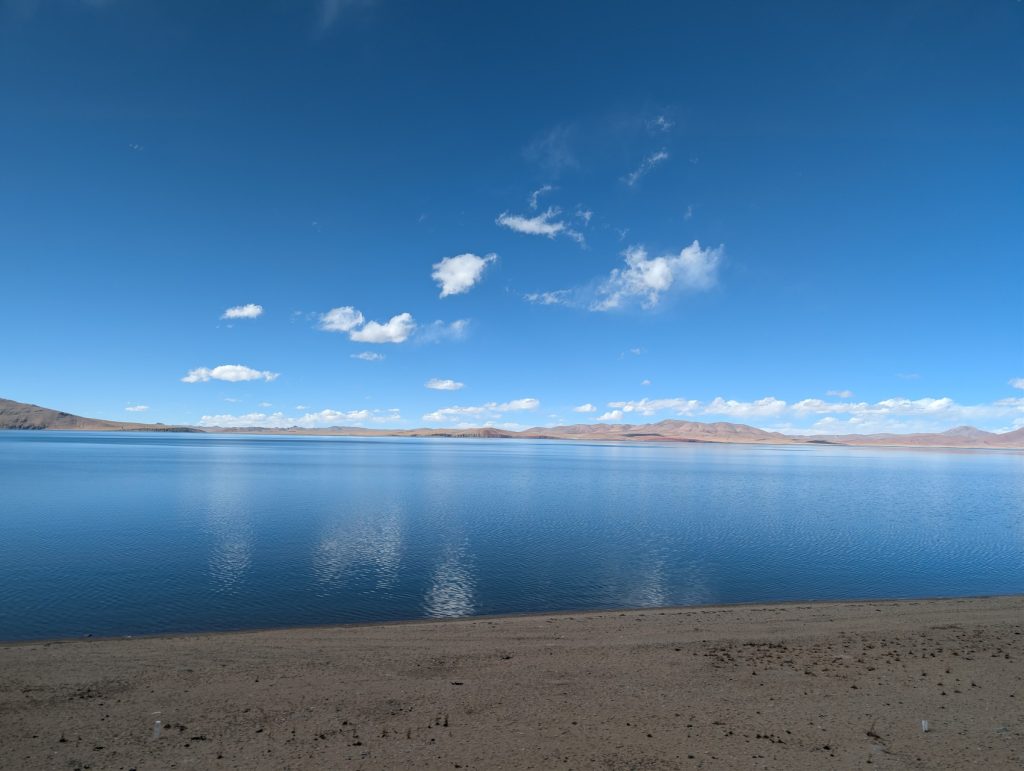
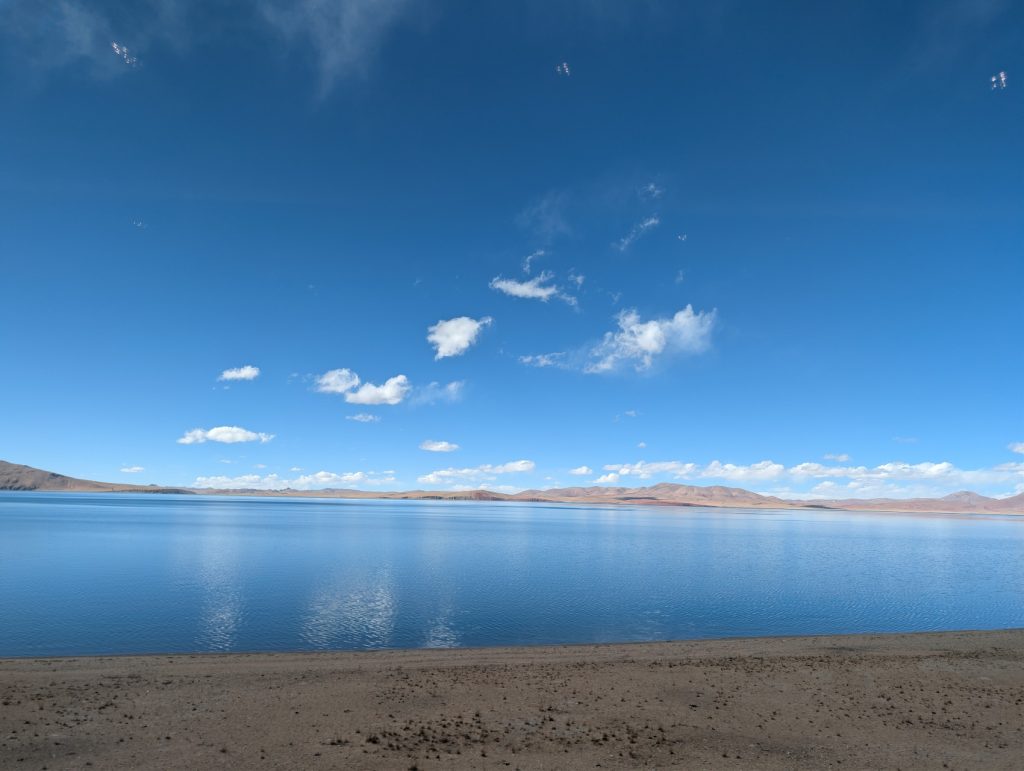
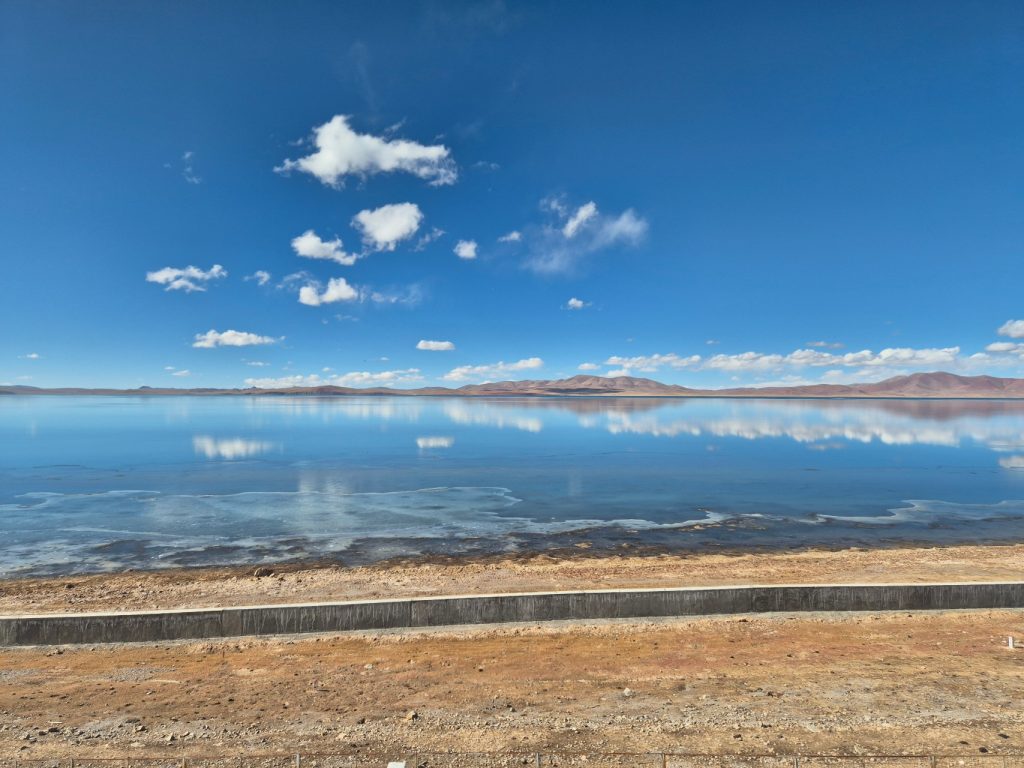
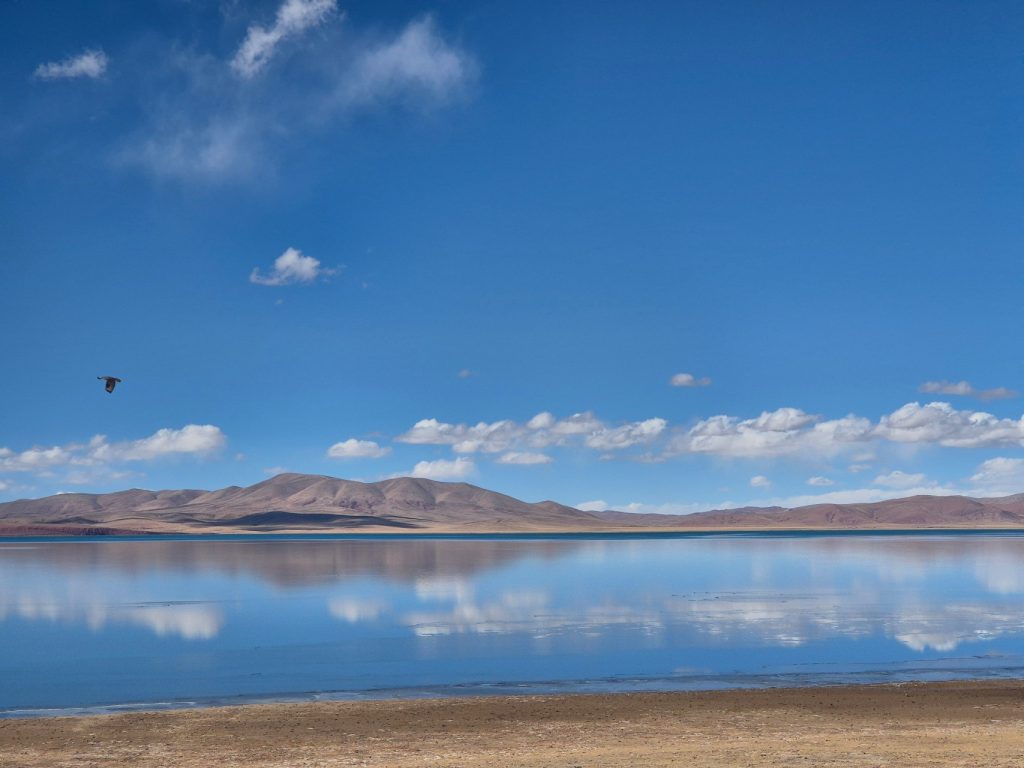
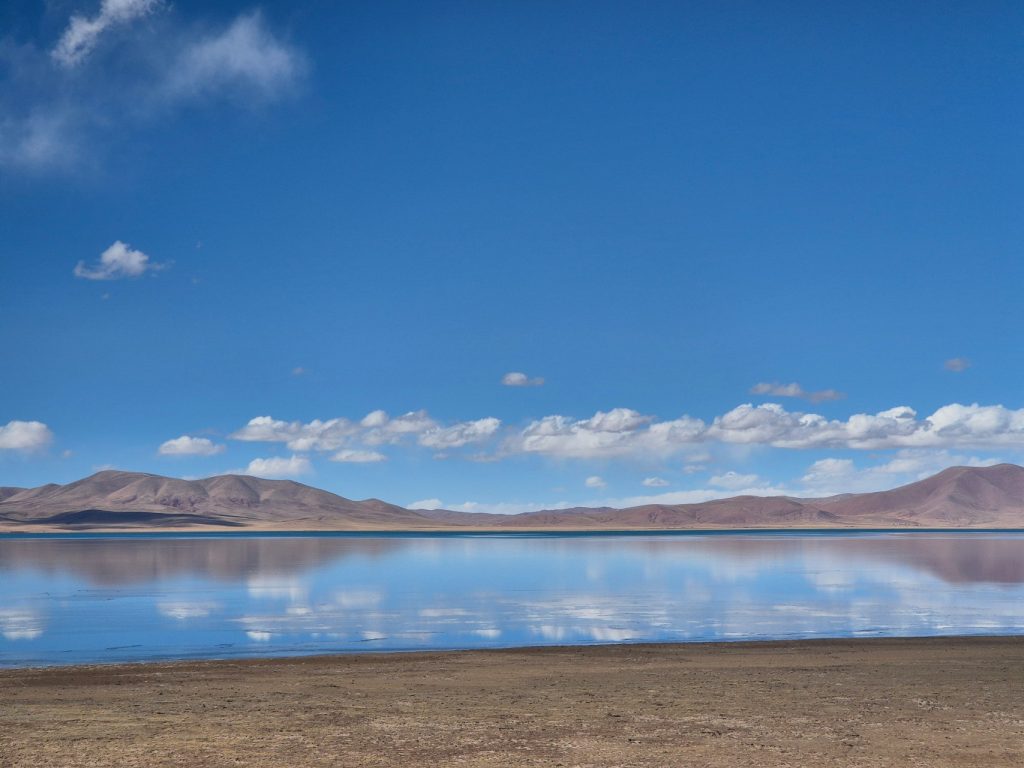
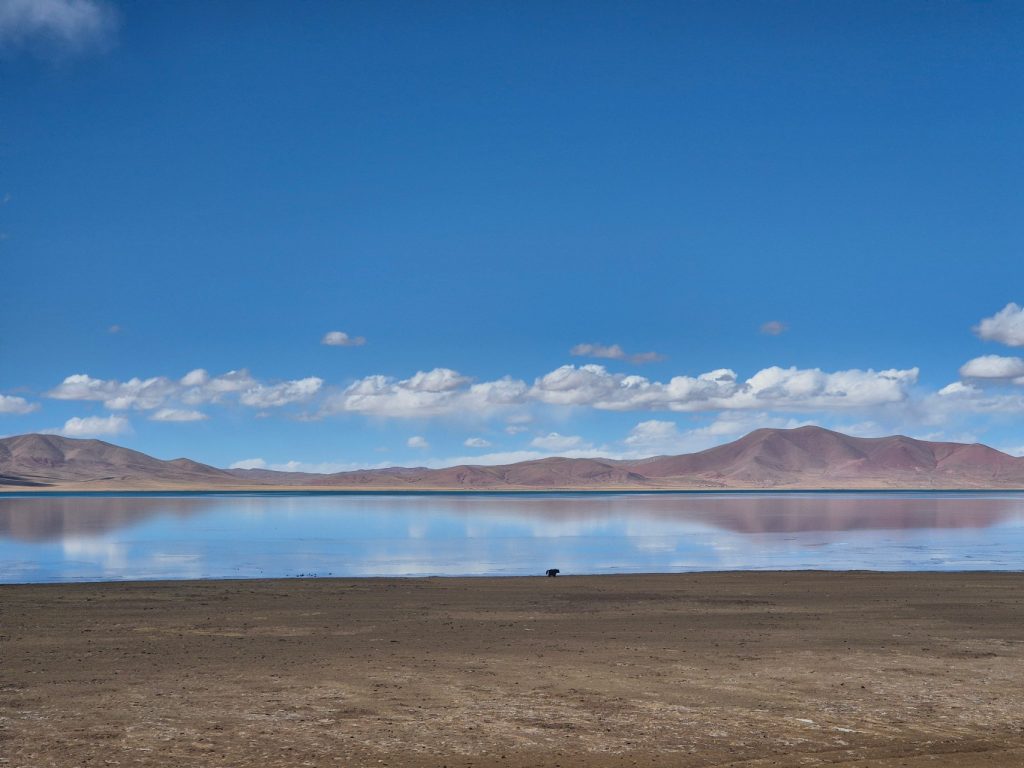
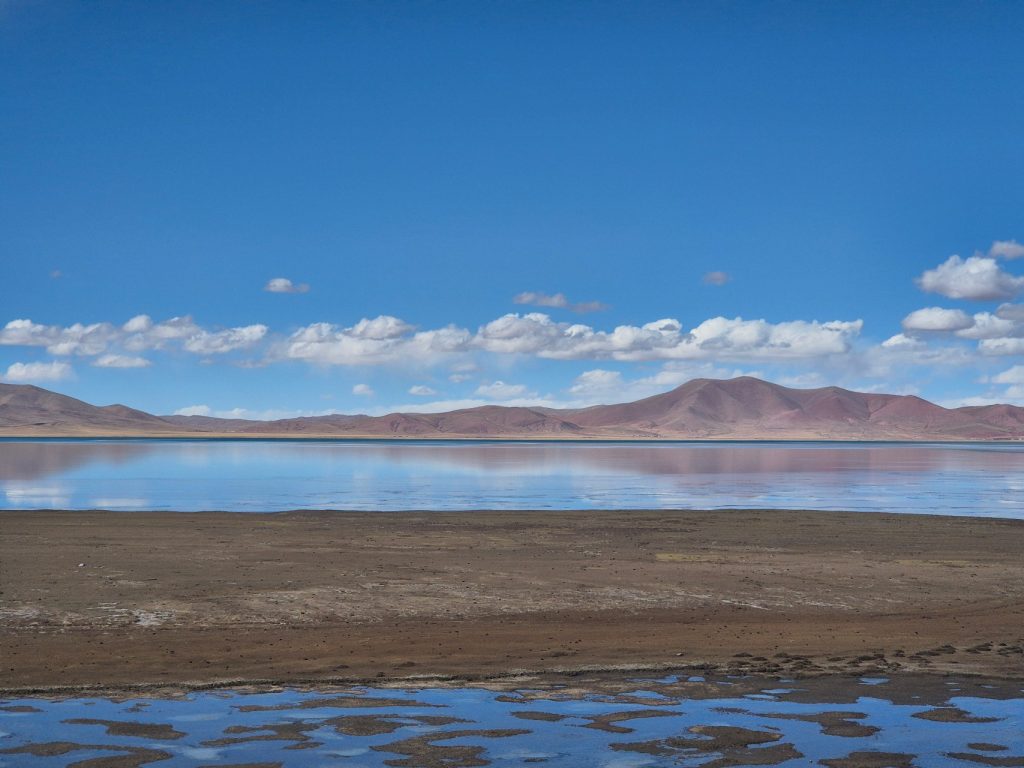
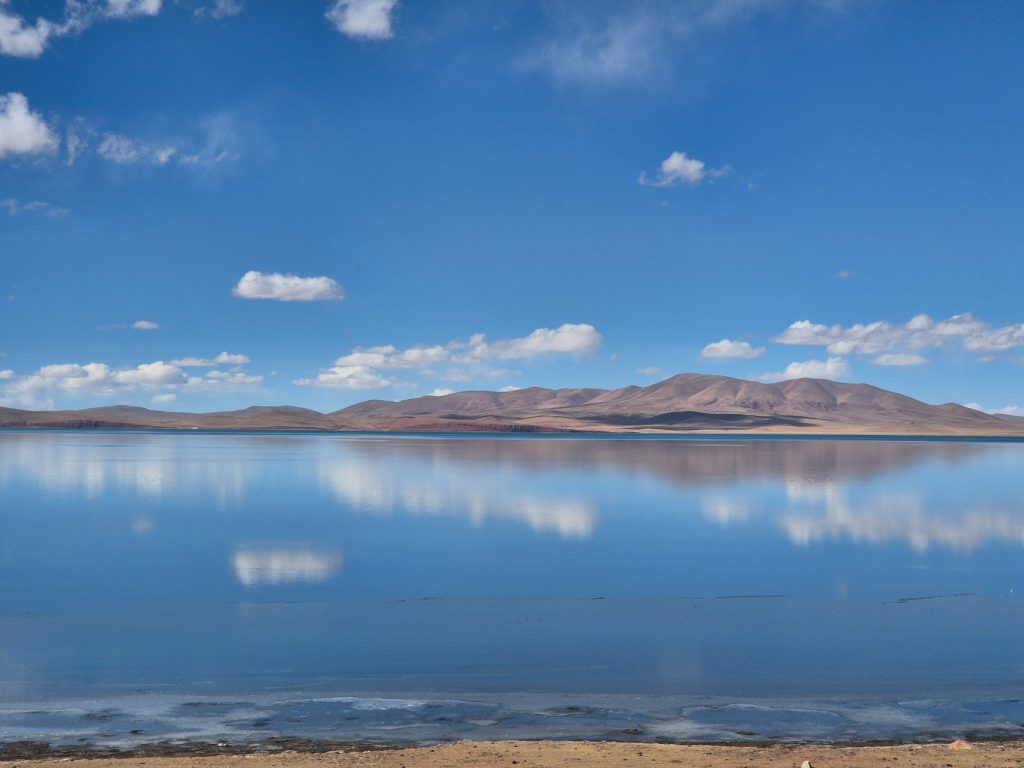
Cuona Lake
Cuona Lake was especially breathtaking – its still waters reflecting the surrounding mountains like a mirror. One of those moments where everyone just goes quiet.
Changjiang (Yangtze) River Source
Passing the source of the Yangtze River was another special moment. It’s humbling to realise that Asia’s longest river begins here, in such a remote and rugged landscape.
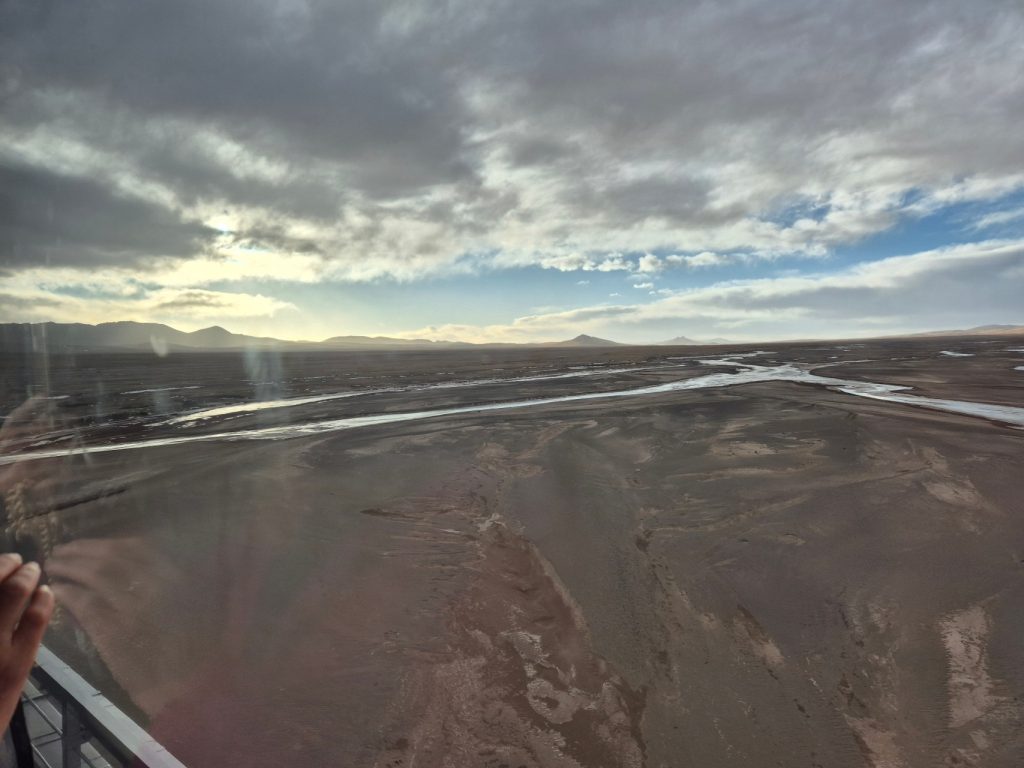
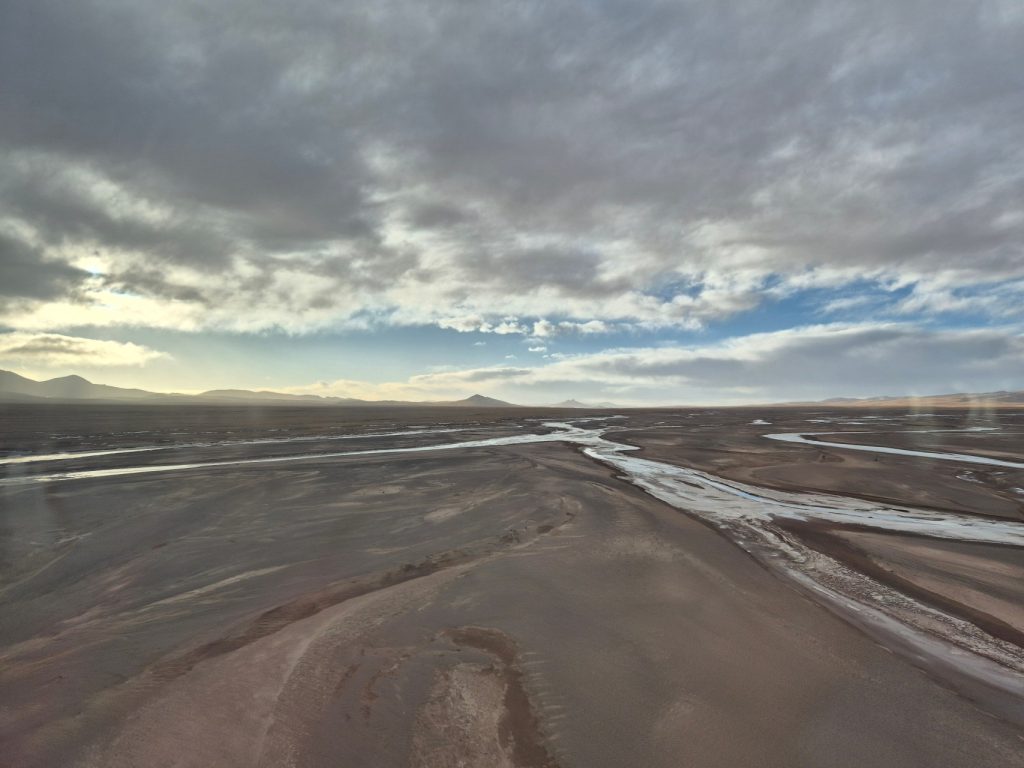
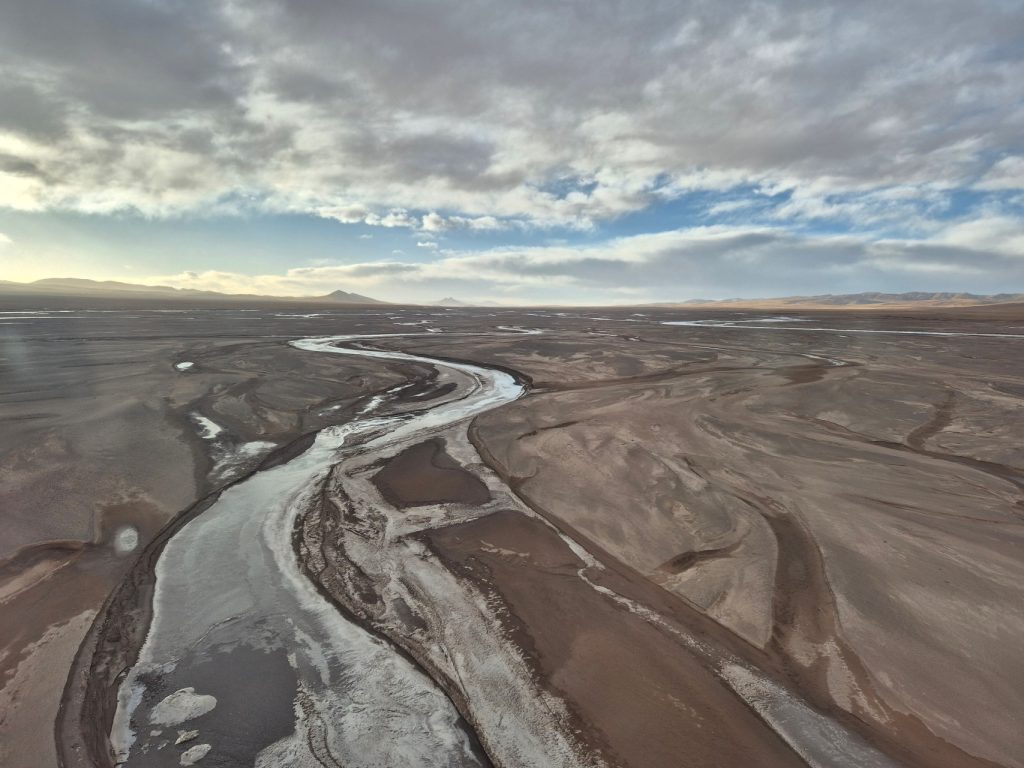
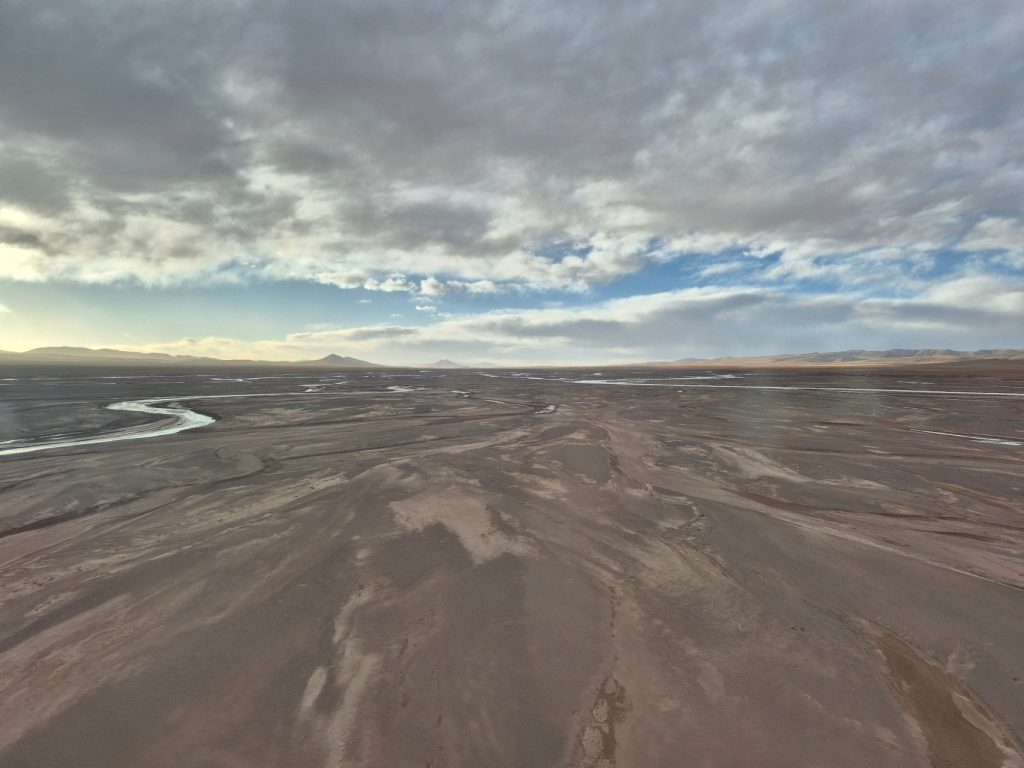
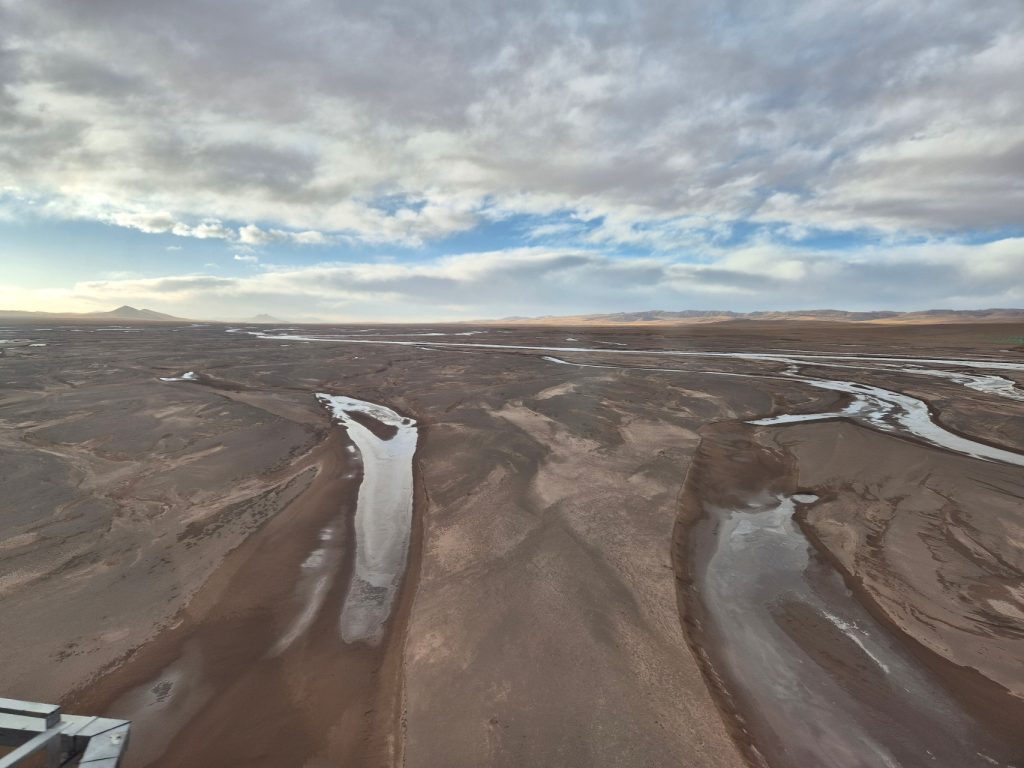
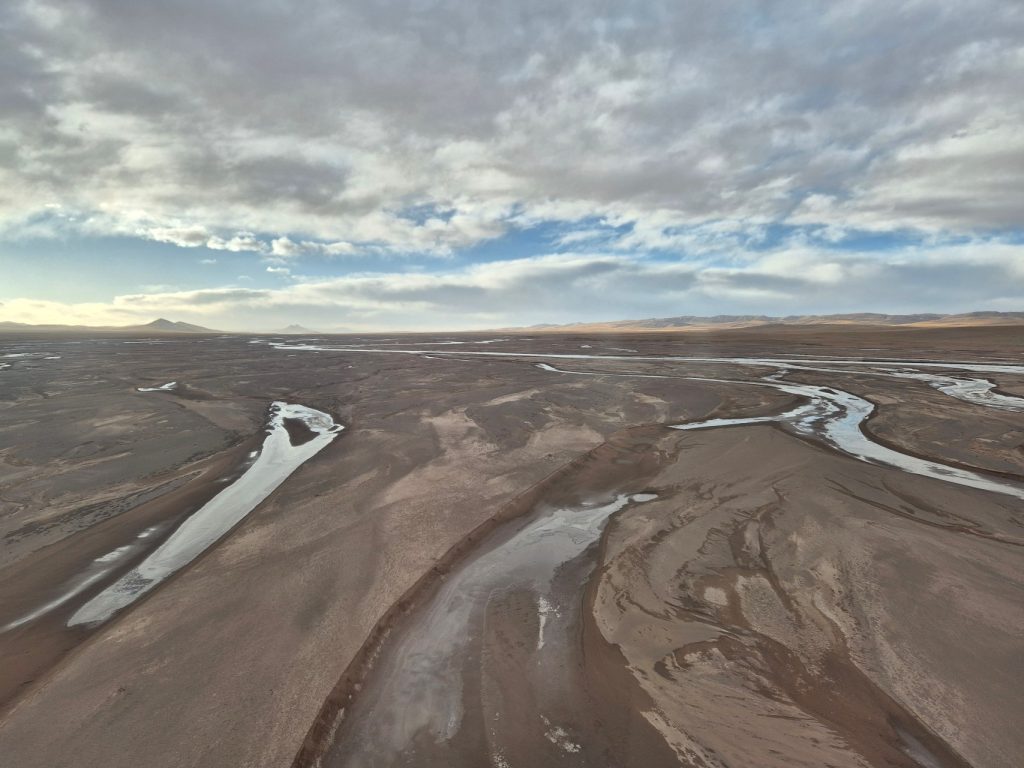
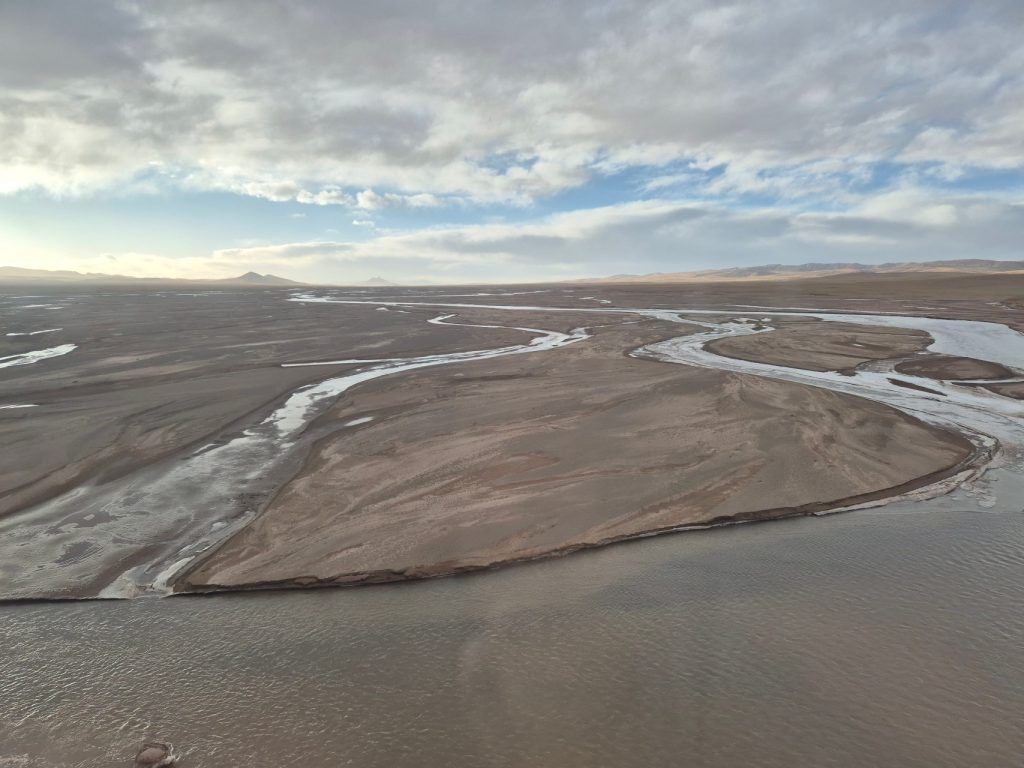
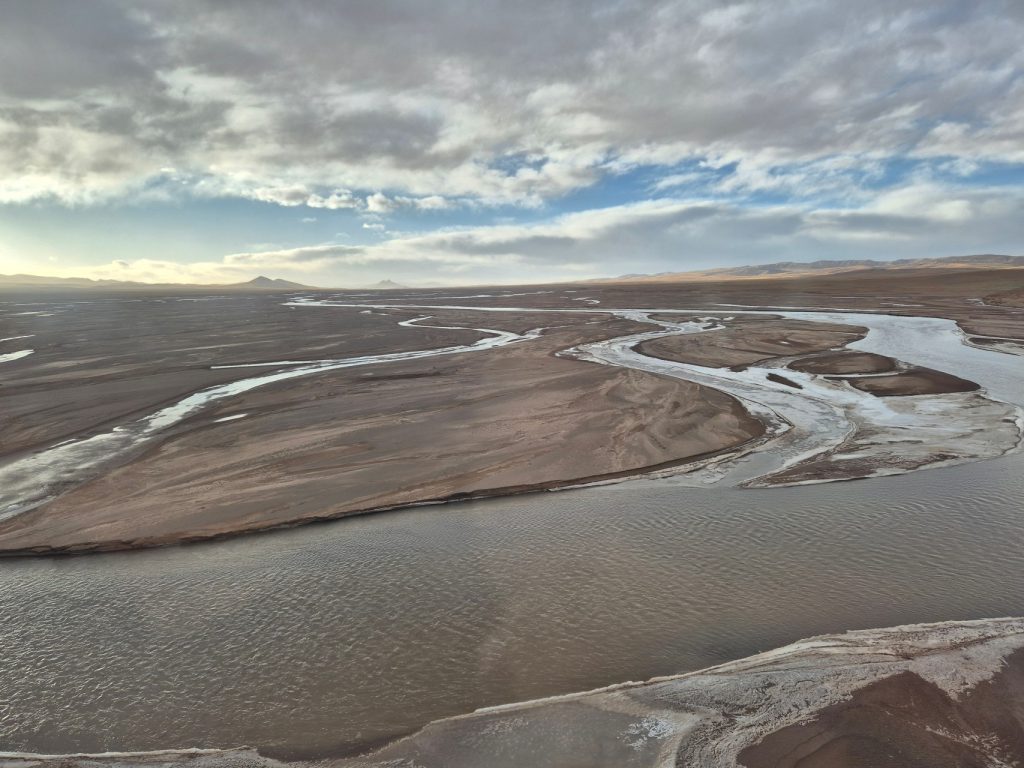
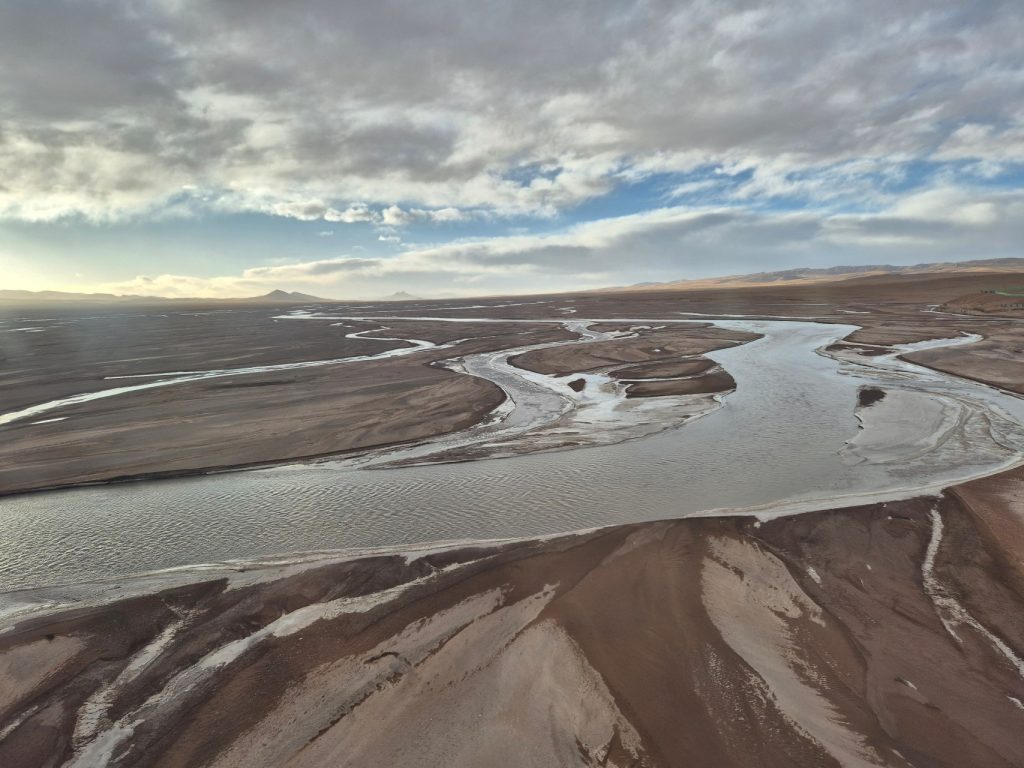
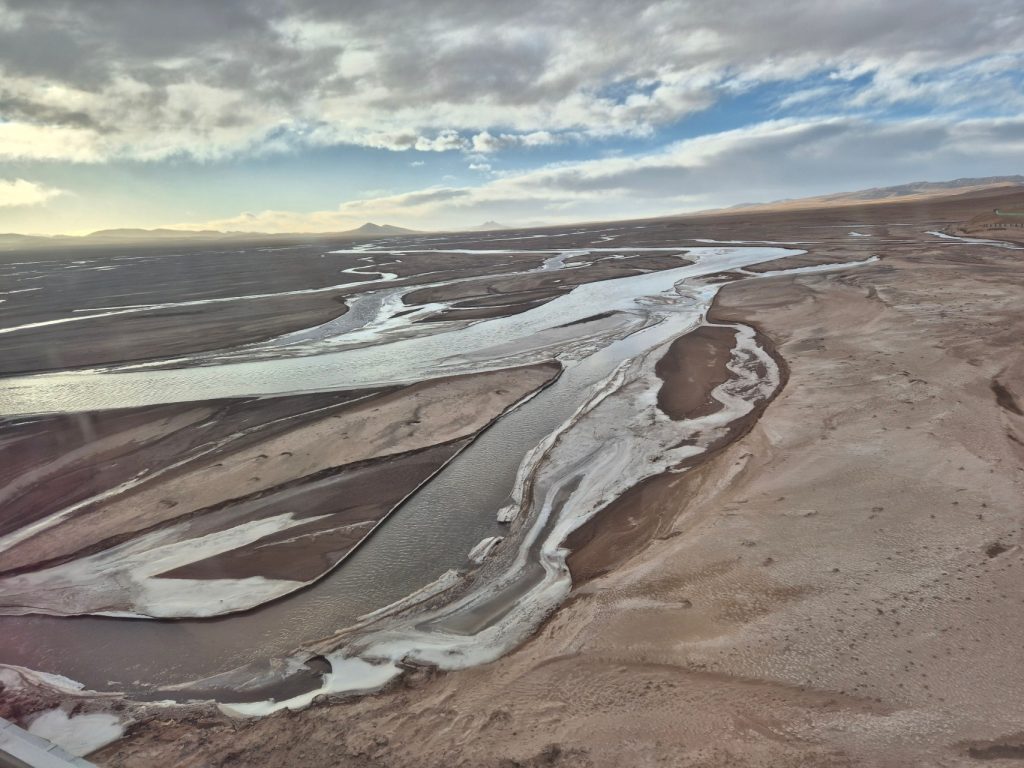
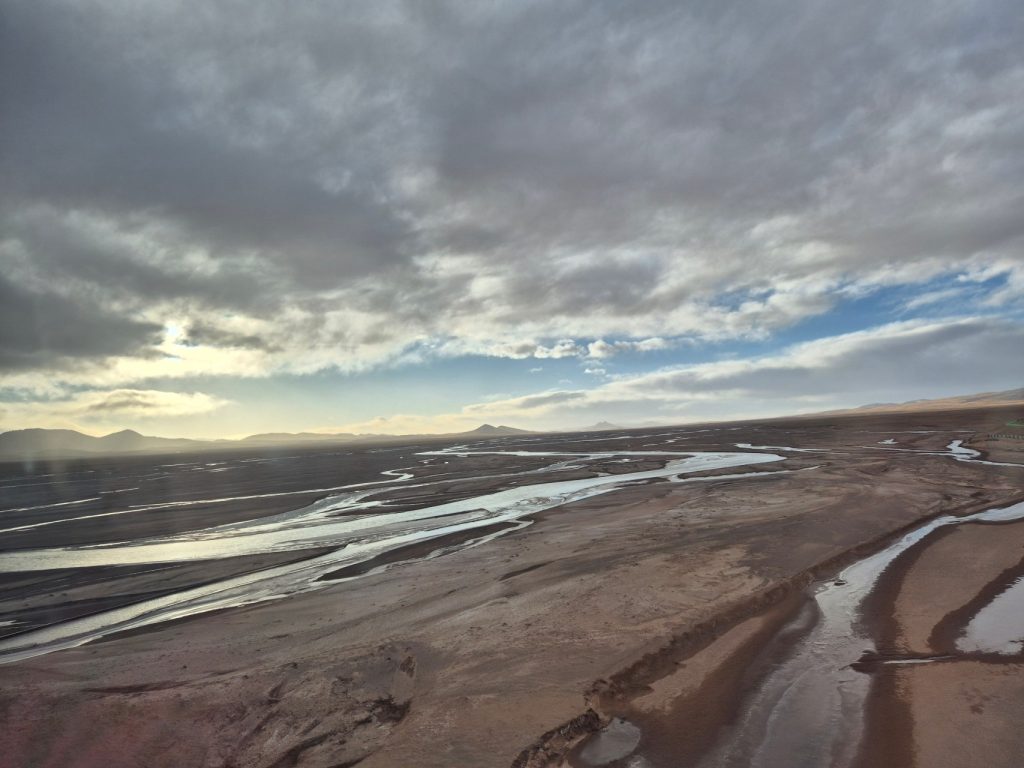
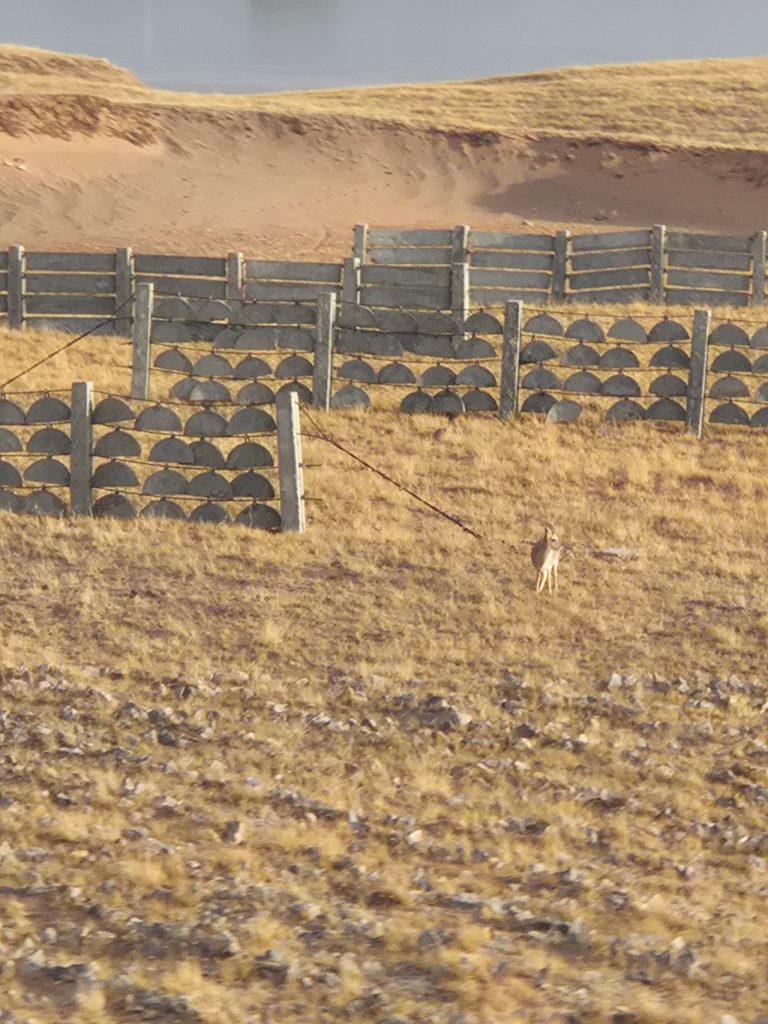
We were also told to watch out for Tibetan antelopes, wild yaks, and other high-altitude wildlife – a reminder of how untouched this region remains. Sitting by the window, watching Tibet slowly drift past, felt like a peaceful and fitting farewell to this extraordinary land.
Engineering Wonders at High Altitude
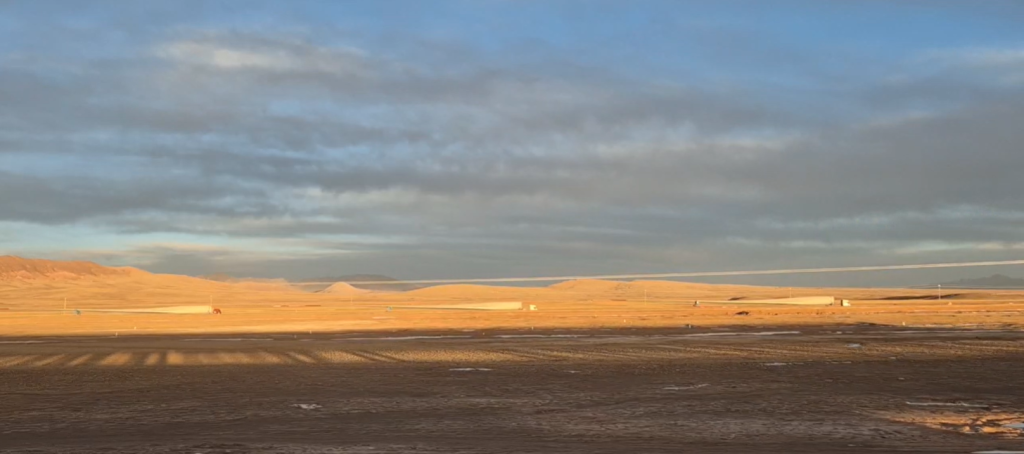
At one point, we spotted a long procession of trailers outside.
Can you guess what they were carrying?
Giant wind turbine blades headed for a high-altitude wind farm in Tibet. Seeing this made me appreciate yet another incredible engineering feat, overcoming harsh conditions at extreme altitudes.
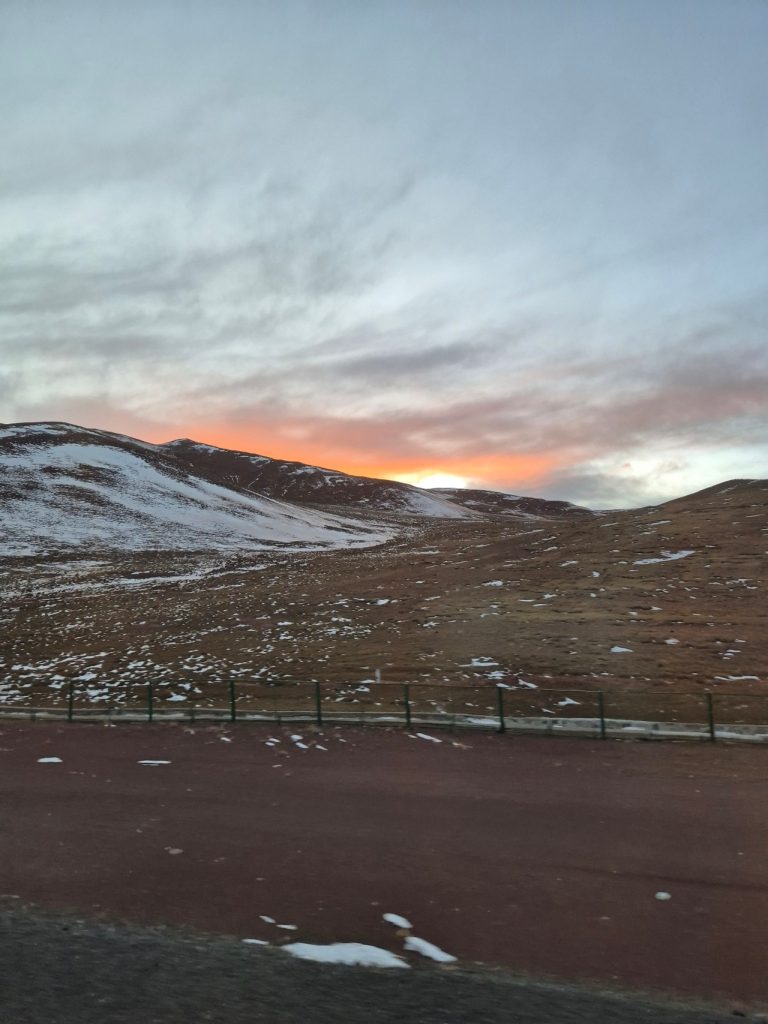
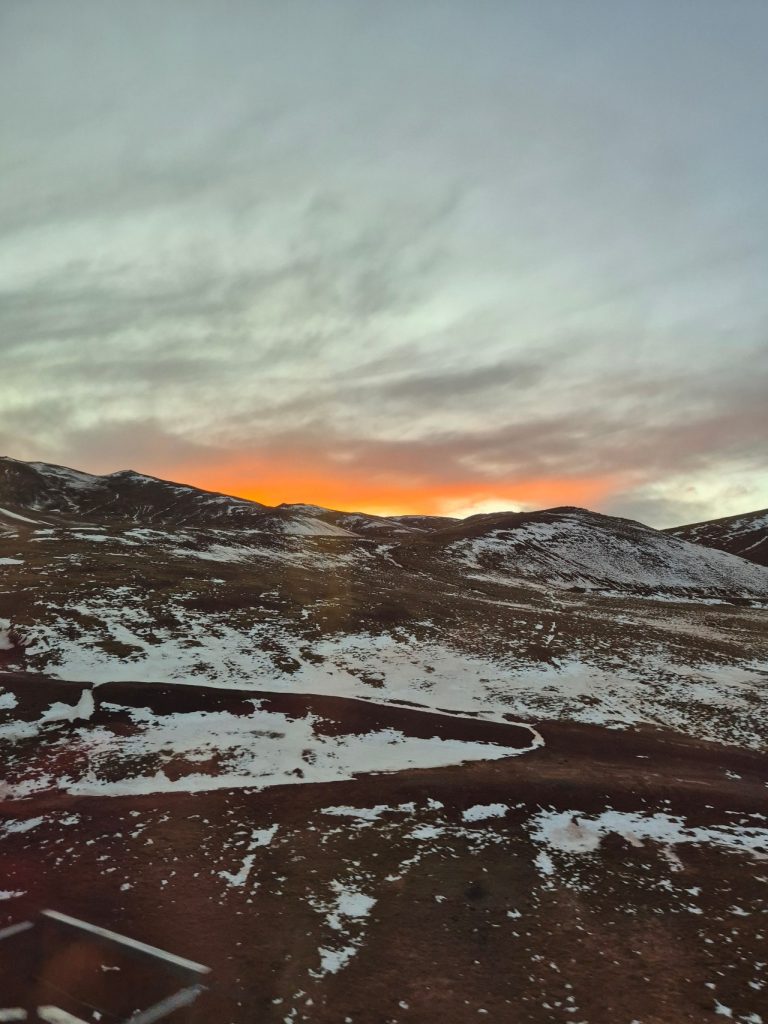
Sunset over the mountains
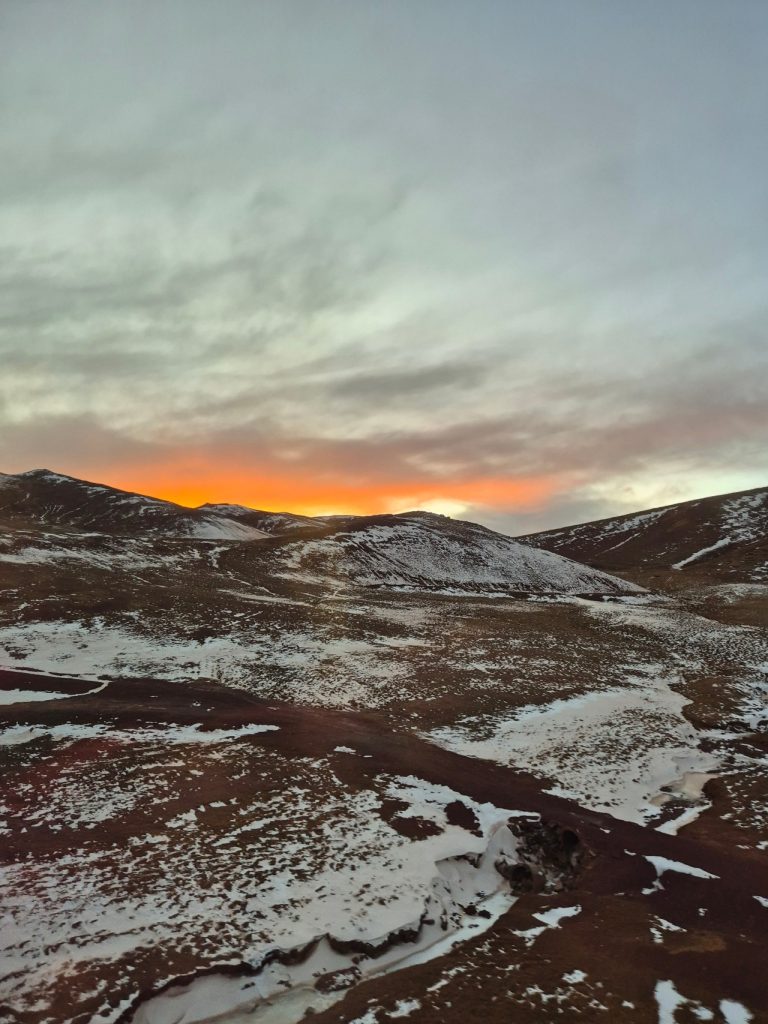
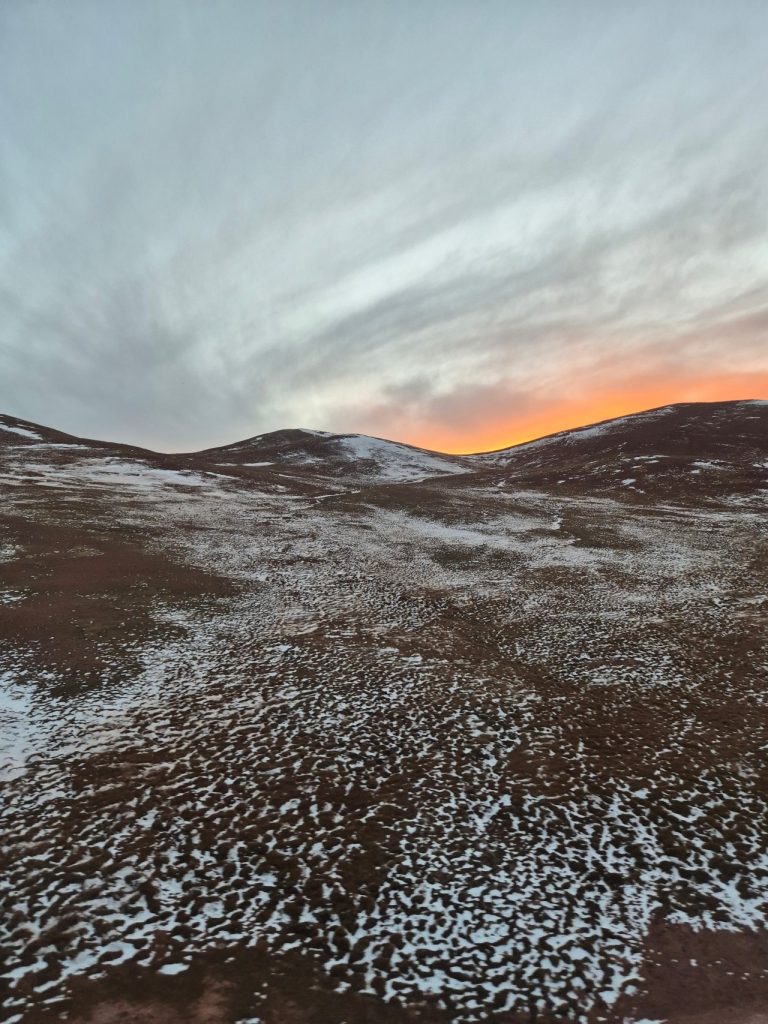
As the sun dipped below the horizon, the sky turned golden before fading into complete darkness.
Darkness, and Night on the Train
Once the sun has set, outside, it is pitch black darkness other than the fleeting lights from the buildings we passed by.
We headed to the dining car for our instant noodle dinner, then retreated back to our cabin. By now, we’d gotten to know our tour group quite well, and the chatting made the hours pass much faster.
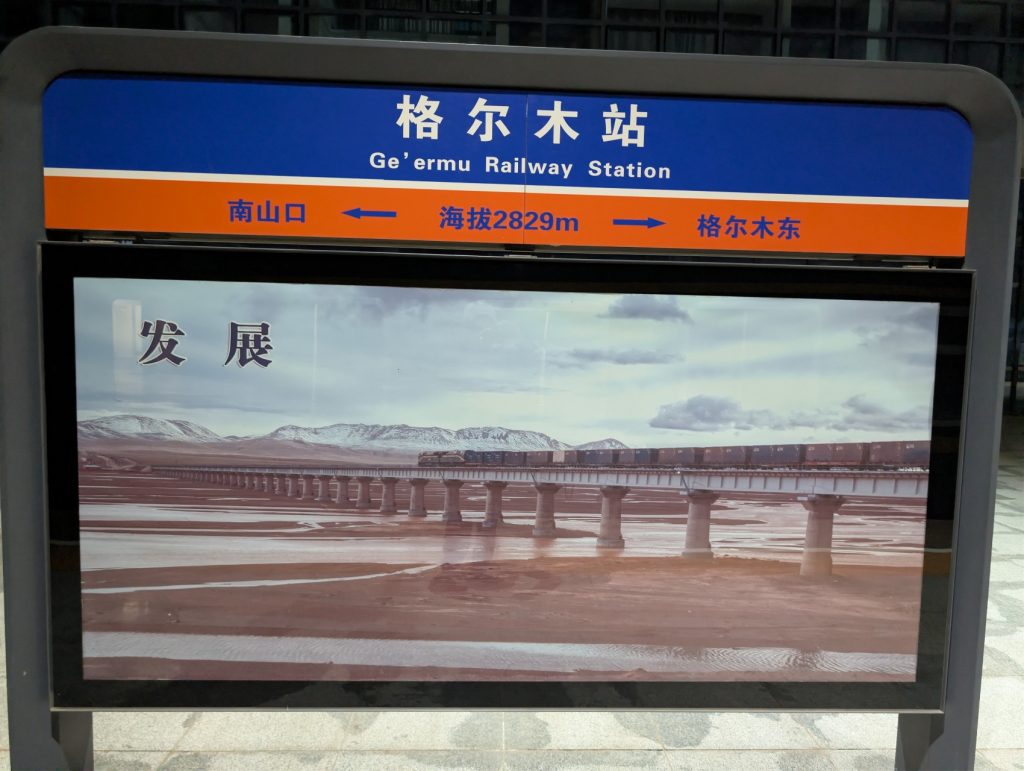
Ge’ermu Railway Station: A Key Stop
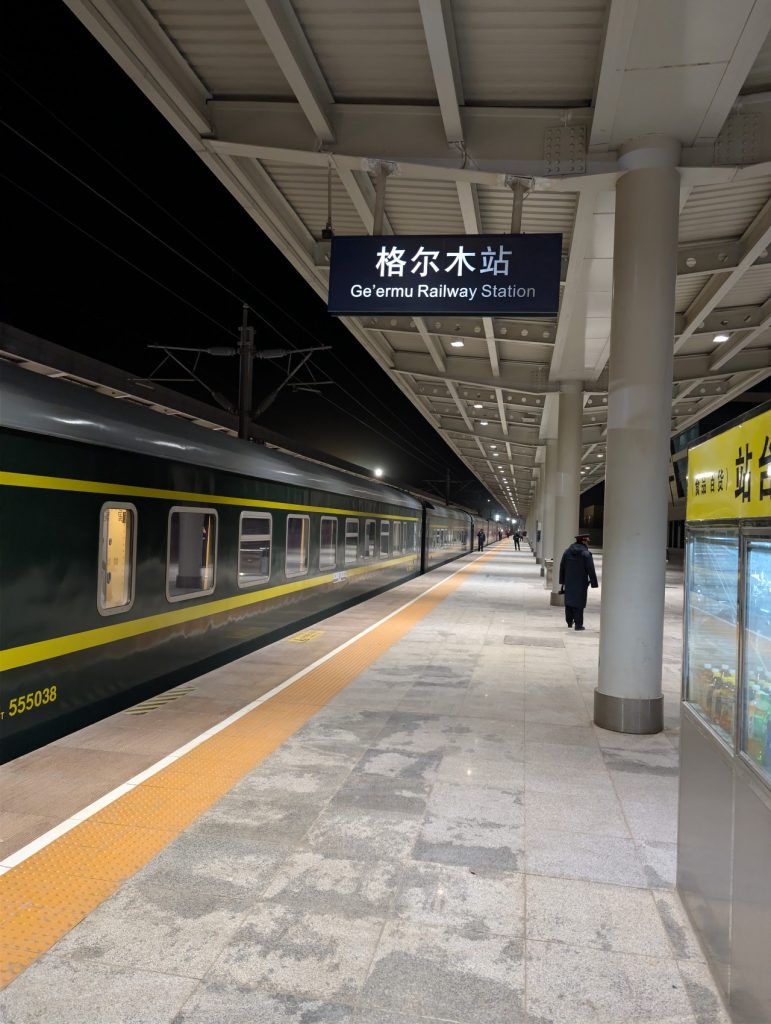
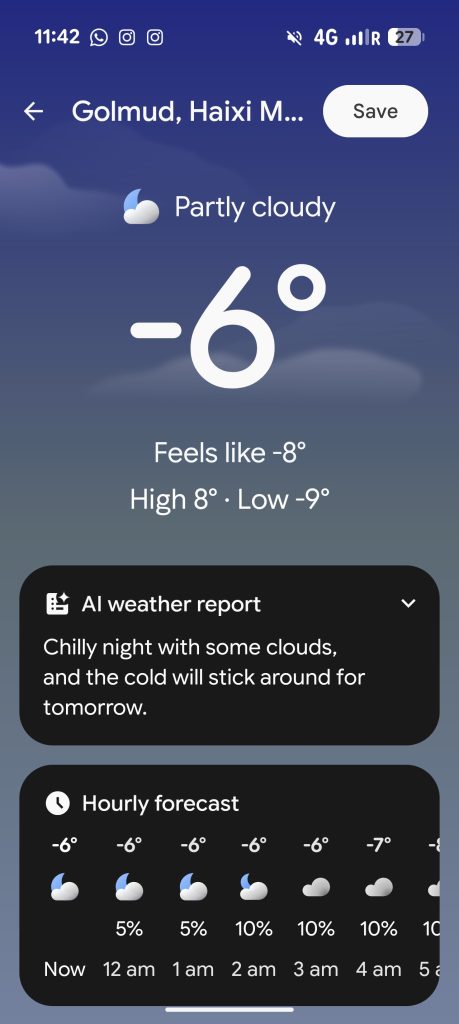
We arrived at Ge’ermu Railway Station late at night past 11pm, where the train stopped for about 20 minutes.
This stop is important because:
- Locomotive change: Special high-altitude engine are replaced with standard locomotive
- Oxygen supply ends: From here onwards, the train is no longer pressurised
- Medical staff disembark
It was –6°C when we stepped onto the platform – freezing cold!
Good Night, Tibetan Plateau
From Ge’ermu onwards, it was finally time to sleep.
Good night, world.
See you at 6am, when we roll into Xining.
Continue reading: Day 12-13: Qinghai Tibet Railway – Xining – Chengdu – Singapore

Leave a Reply